

Looking for the ultimate one-pot Sunday dinner? This Hungarian Beef Stew (Pörkölt) is the answer. It's a bold, beefy, and deeply traditional recipe that trades complex ingredients for time and technique. No shortcuts here-just meltingly tender beef and the best paprika sauce you've ever tasted. Watch my YouTube recipe inside to see how this simple list of ingredients transforms into a Hungarian icon.
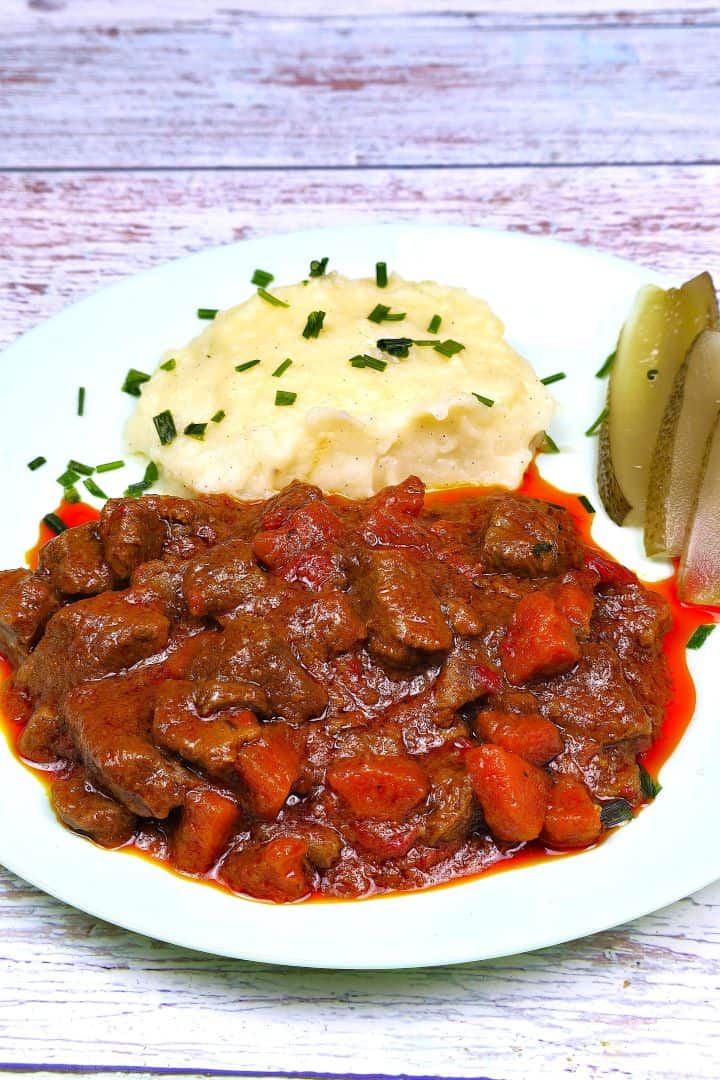
While you'll find Hungarian Beef Stew (Pörkölt) on kitchen tables year-round, it truly shines during the colder months and festive gatherings. In Hungary, this isn't just a weekday meal; it's the centerpiece of Sunday family lunches and a staple for outdoor Bogrács (cauldron) cooking during summer festivals. It is especially popular during the winter holidays when the deep, warming heat of authentic sweet paprika is the ultimate antidote to the frost.
The inspiration for this "Ultimate" version actually grew out of my popular Authentic Hungarian Goulash Soup. While that soup is a beloved classic for a lighter meal, many of you asked for a thicker, more concentrated "stew" version-and that is exactly what this Pörkölt delivers. It takes those same soul-satisfying flavors but intensifies them into a rich, velvety gravy.
To make this a complete Hungarian feast, you need the perfect side dish to soak up the legendary "szaft" (the thick, paprika-infused sauce). I highly recommend serving this alongside my Caramelized Onion Mashed Potatoes for an extra layer of savory sweetness. Or, if you prefer something to dip, a thick, warm slice of my Homemade Potato Bread is the ultimate vessel for every last drop of that smoky gravy.
Jump to:
What You'll Need for Authentic Pörkölt
To make this the Ultimate Hungarian Beef Stew, the quality of your ingredients is everything. In Hungarian cooking, we don't rely on a long list of spices; instead, we focus on the "Holy Trinity" of the kitchen: high-quality fat, an abundance of onions, and authentic paprika. These simple elements, when treated with patience, create a complex, deep flavor that no store-bought broth can replicate.

- Beef Meat (Shoulder/Chuck): I recommend using beef shoulder; it's the tastiest cut for stew and becomes incredibly soft after a long simmer.
- Wheat Flour: A light dusting on the beef cubes helps create a beautiful brown crust when searing and naturally thickens the gravy later.
- Yellow Onion & Garlic: These are the flavor foundations. The onion provides sweetness and body, while the garlic adds that essential savory kick.
- Carrot: A traditional addition in my family recipe, providing a subtle earthy sweetness that balances the rich paprika.
- Sweet Bell Pepper & Fresh Tomatoes: These vegetables steam down during the slow cook, adding moisture and acidity to the base of the stew.
- Sunflower Oil (or Lard): Use oil for a clean taste, or pork/goose fat for a more traditional, rich Transylvanian flavor.
- Authentic Hungarian Paprika: The soul of the dish! It provides the iconic red color and smoky-sweet aroma.
- Tomato Paste & Sweet Pepper Paste: A spoonful of each intensifies the color and adds a concentrated layer of umami to the sauce.
- Bay Leaf, Sea Salt, and Black Pepper: Classic seasonings that enhance the natural flavors of the beef without overpowering them.
- Water (or Red Wine): Used to deglaze the pot and provide the liquid for the slow, 3-hour simmer.

How to Make the Ultimate Beef Stew: Step-by-Step
If you've ever struggled with tough meat or a thin, watery sauce, this is the method that changes everything. Because the secret to a true Hungarian Pörkölt lies in the timing and the "szaft" (the rich, concentrated gravy), I've filmed the entire process to show you exactly what to look for at every stage. You can watch the Ultimate Hungarian Beef Stew (Pörkölt) video recipe here to see how those simple onions and paprika transform into a thick, velvet masterpiece. Seeing the sizzle of the meat and the color of the paprika in real-time will give you the confidence to master this traditional dish on your very first try!
Phase 1: Preparing the Ingredients
Before turning on the heat, it is essential to have all your components prepped. This ensures you can add ingredients at exactly the right moment without the risk of burning your precious paprika.
Prepping and Flouring the Beef
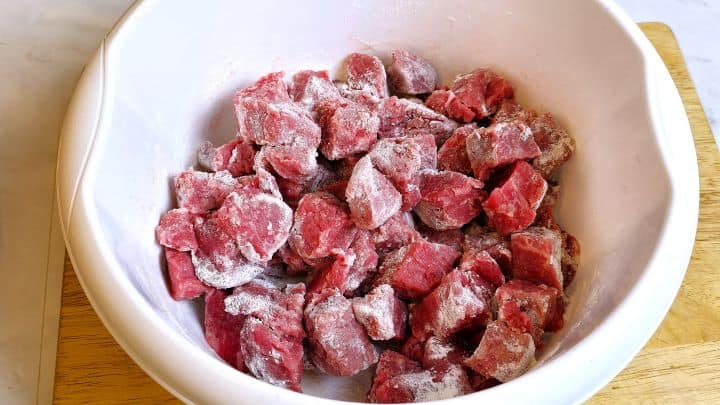
Start by trimming any excess gristle from the beef shoulder and dicing it into uniform 4-5 cm cubes. Pat the meat dry with a paper towel; moisture is the enemy of a good sear! Once dry, roll the cubes in the wheat flour. Give them a good shake to remove any excess-you want a thin, translucent coating, not a thick batter.
The Aromatics: Onion and Garlic
Peel and finely chop your yellow onion and garlic cloves. In a traditional Pörkölt, the onions aren't just for flavor-they are the thickening agent for the sauce. The finer you chop them, the more easily they will dissolve into that velvety "szaft" later on.

The Vegetable Base: Pepper and Carrot
Clean the sweet red bell pepper and cut it into small, even cubes.
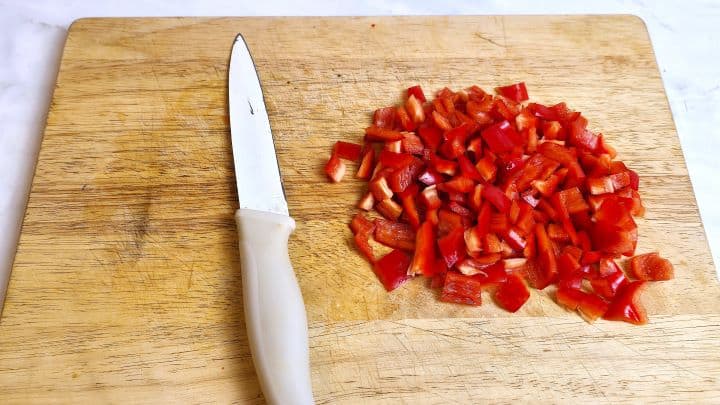
For the carrot, peel it and slice it into thin rounds or small pieces. While the pepper adds acidity and smoke, the carrot provides a subtle sweetness that balances the intensity of the beef.

The Fresh Tomatoes
Finally, wash your tomatoes and dice them into small pieces. You don't need to peel them; the skins will soften during the long simmer. If your tomatoes aren't perfectly ripe, this is where that extra teaspoon of tomato paste will really help deepen the color and flavor.

Phase 2: Searing for Maximum Flavor
This is the most important step for achieving a "rich" taste. We aren't just cooking the meat here; we are creating a savory crust that will eventually dissolve into the gravy, giving it an incredible depth of color and flavor.
Heat the Pot
Place your Dutch oven or heavy-bottomed saucepan over medium-high heat and add the sunflower oil (or lard). Wait until the fat is shimmering and hot. If the oil isn't hot enough, the meat will steam instead of sear, and you'll miss out on that golden-brown magic.
The Golden Sear
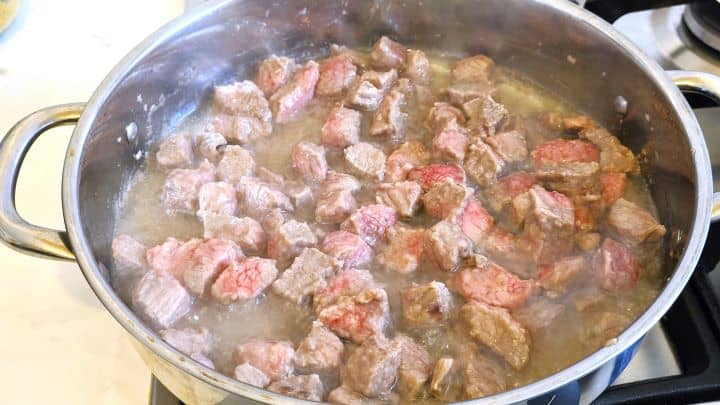
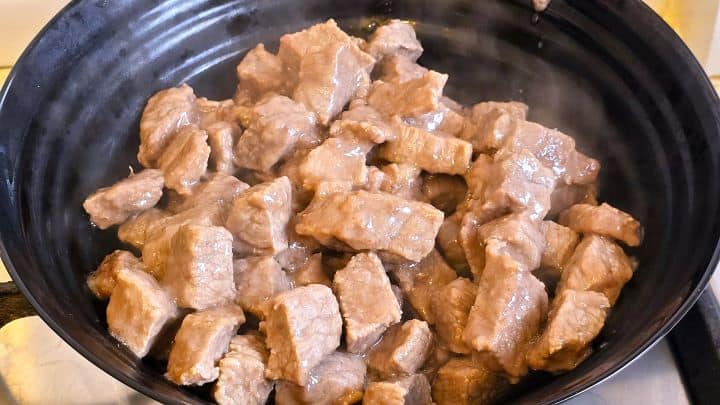
Carefully add the floured beef cubes to the pot. Pro-tip: Don't overcrowd the pan! If you put too much meat in at once, the temperature of the pot will drop. Work in batches if necessary. Let the meat fry for 3-4 minutes without moving it too much, then turn the cubes until they are crusty and brown on all sides.
Remove and Rest
Once the meat has a beautiful, dark crust, use a slotted spoon to remove the cubes from the pot and set them aside on a plate. You will notice a dark, sticky layer forming on the bottom of your pot-do not wash this away! These are "brown bits" (known as fond), and they are packed with concentrated beef flavor that will make your "szaft" legendary.
Phase 3: Building the "Szaft" and the Slow Simmer
Now we focus on the vegetables and the secret to that thick, iconic Hungarian gravy.
Frying the Chopped Onions
In the same pot you used for the meat, add the finely chopped onions. If the pot looks a bit dry, add another splash of oil or a small knob of lard. Sauté the onions over medium heat, stirring constantly to scrape up the brown beef bits from the bottom. Cook them until they become soft and take on a light golden color.

Sautéing the Vegetables
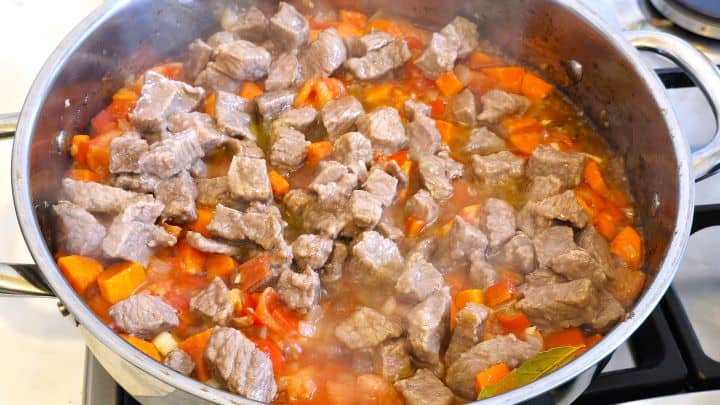
Once the onions are ready, add the chopped garlic, red sweet peppers, and sliced carrots. For an extra layer of traditional flavor, toss in the bay leaf now. Let everything fry together for about 4-5 minutes, stirring occasionally so the garlic doesn't burn. This creates a sweet, aromatic base for the stew.

Bringing the Meat Back
Now, return the seared beef cubes (and any juices that collected on the plate) back into the pot with the vegetables. Stir everything well so the meat is fully incorporated with the sautéed aromatics.
The Iconic Seasoning
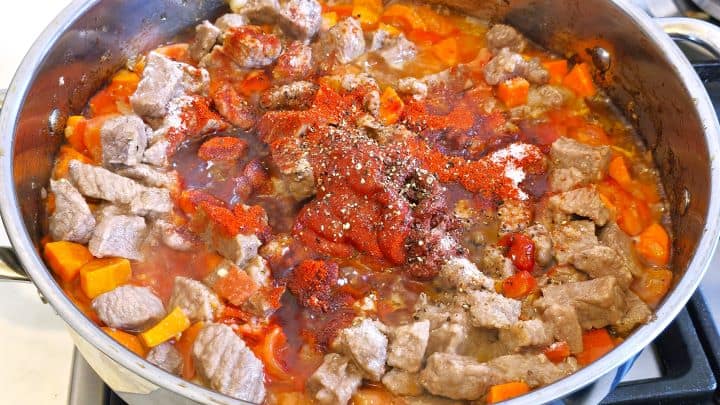
This is the most important step for authenticity. Season with sea salt and freshly ground pepper, then add the tomato paste, sweet pepper paste, and the Hungarian paprika powder.
Important: Keep the heat low during this step! You want the paprika to dissolve into the fat to release its color and aroma without scorching.
Adding the Fresh Tomatoes
Add your diced tomatoes on top and give everything a thorough mix. Let it cook for 5-6 minutes in its own juices. You'll see the tomatoes start to break down and the paprika oil begin to coat everything in a beautiful, deep red hue.
Fill with Water
Pour in just enough water (or red wine) to cover the meat. Don't drown it! A Pörkölt should be thick, not soupy. Cover with a tight-fitting lid and reduce the heat to a gentle simmer. Now, patience is key: let it cook for 2.5 to 3 hours, checking occasionally to ensure there is enough liquid.

The Result: Ready to Serve
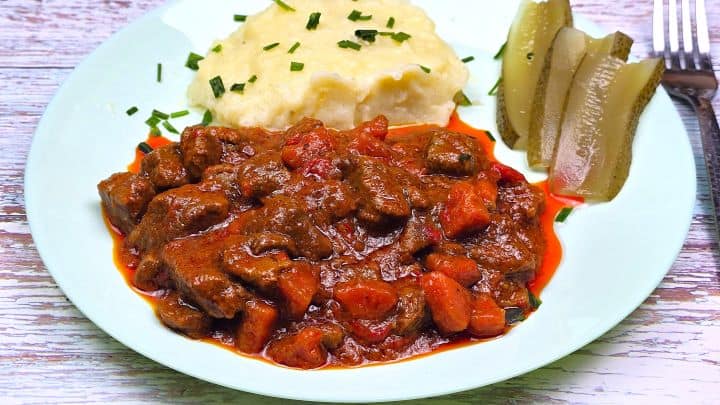
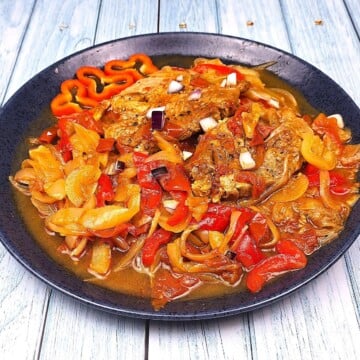
The stew is finished when the beef is so soft it can be broken with a spoon and the liquid has reduced into a thick, glistening, and velvety gravy. Your kitchen should now smell exactly like a traditional Hungarian home!

How to Serve the Ultimate Pörkölt
In Hungary, the way you serve your stew is just as important as how you cook it. Because the "szaft" (gravy) is so rich and concentrated, you need a side dish that can stand up to those bold flavors and soak up every delicious drop.
The Perfect Pairings
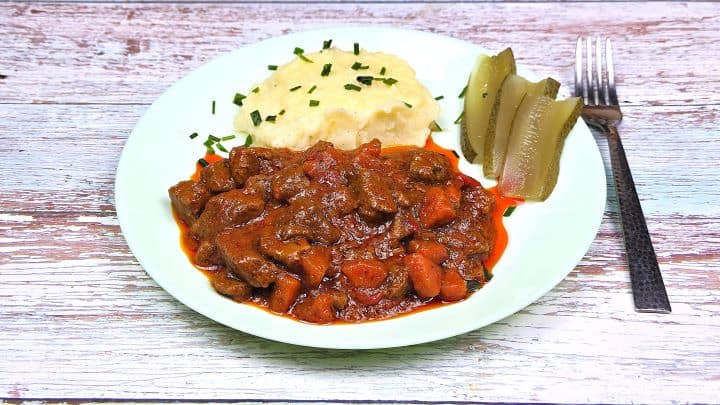
While you can serve this beef stew with rice, pasta, or even a simple polenta, my absolute favorite way to enjoy it is with potatoes. For a truly indulgent experience, I served this batch with my Caramelized Onion Mashed Potatoes. The sweetness of the onions in the mash complements the smoky paprika in the beef perfectly.
If you prefer a more rustic feel, nothing beats a thick, warm slice of Homemade Potato Bread. Using the bread to "mop up" the remaining sauce at the end of the meal is a tradition in itself!
Finishing Touches
To cut through the richness of the beef and lard, I highly recommend serving a side of pickles. A bowl of sun pickles or a crisp cabbage salad provides a bright acidity that cleanses the palate between bites. A dollop of cold sour cream on top is also a popular way to add a creamy finish to your plate.
How to Store and Reheat Your Hungarian Beef Stew
One of the best things about Hungarian Beef Stew (Pörkölt) is that the flavors continue to develop and deepen as they sit. If you have leftovers, don't worry-they are a gift for your future self!
Storing in the Refrigerator
Allow the stew to cool completely at room temperature before transferring it to an airtight container.
- Duration: It will stay fresh and delicious in the fridge for 3 to 4 days.
- Tip: Because the "szaft" is rich in natural fats and collagen, it may thicken into a jelly-like consistency when cold. This is perfectly normal and a sign of a well-cooked stew!
Freezing for Later
Pörkölt freezes beautifully because it doesn't contain potatoes (which can get grainy when frozen).
- To Freeze: Place the cooled stew in freezer-safe containers or heavy-duty freezer bags.
- Duration: It will maintain its best quality for up to 3 months.
- Thawing: For the best results, let it thaw in the refrigerator overnight before reheating.
How to Reheat Properly
To keep the beef tender and the sauce silky, avoid the microwave if possible.
- Stovetop (Recommended): Place the stew in a small pot over low heat. Add a splash of water or beef broth to loosen the gravy. Heat gently, stirring occasionally, until it reaches a simmer.
- Microwave: If you're in a hurry, heat in 1-minute intervals, stirring in between to ensure the middle gets hot without overcooking the edges of the beef.
Top Tips for Success
1. The Onion Ratio is Key - In Hungarian cooking, onions aren't just a vegetable; they are the thickener. You might feel like you are chopping too many, but trust the process! As they slow-cook, they break down completely, creating that thick, luxurious "szaft" (gravy). Never skip the long sauté-getting them soft and golden is what gives the stew its underlying sweetness.
2. Respect the Paprika - Not all paprika is created equal. For an authentic taste, look for imported Hungarian Sweet Paprika (Édes). It should be a vibrant, deep red and smell intensely aromatic. Most importantly, never burn it. If you fry paprika in oil that is too hot, it turns bitter instantly. Always pull the pot off the heat for a moment before stirring in the red gold.
3. Don't Drown the Meat - A common mistake is adding too much water at the beginning. Pörkölt is a stew, not a soup! You want to add just enough liquid to barely cover the meat. The beef should simmer in its own juices and the steam from the vegetables. This concentrates the flavors and ensures your gravy is rich and thick, not watery.
4. Choose the Right Fat - While sunflower oil works perfectly, using pork lard or goose fat is the traditional way to unlock the full potential of the paprika. Fat carries the flavor of the spices, and lard provides a silky mouthfeel that you just can't get with vegetable oil alone.
5. Patience is the Secret Ingredient - You cannot rush a great beef stew. Depending on the cut of meat, it may take 2.5 hours or even 3.5 hours to reach perfection. Use the "spoon test"-if you can easily break a cube of beef against the side of the pot with a wooden spoon, it's ready. If it's still chewy, give it more time!
Frequently Asked Questions
This is the most common question! In Hungary, Gulyás (Goulash) is actually a soup with a thinner broth, usually containing potatoes and carrots. Pörkölt is what the rest of the world typically calls "Beef Stew." It is thicker, more concentrated, and has a heavy emphasis on the "szaft" (the rich gravy). If you're looking for the soup version, check out my Authentic Hungarian Goulash Soup recipe.
Traditional Pörkölt is usually made with Sweet (Édes) paprika, but Hungarians love a little heat! If you want a kick, you can add a half teaspoon of Hot (Erős) Hungarian paprika or drop a whole dried chili pepper into the pot during the simmer. Alternatively, serve it with a side of "Erős Pista" (Hungarian hot pepper paste) so everyone can adjust the heat to their liking.
While a cast-iron Dutch oven is best for heat distribution, you can use any heavy-bottomed pot with a tight-fitting lid. The goal is to prevent the moisture from escaping so the beef stays tender. You can also adapt this recipe for a Slow Cooker-just sear the meat and sauté the onions in a pan first before transferring everything to the crockpot for 6-8 hours on low.
If the meat is tough, it simply needs more time! Every cow is different, and some cuts of chuck or shoulder have more connective tissue than others. Don't turn up the heat (that will only make it tougher)-keep it at a low simmer and check it every 20 minutes until it passes the "spoon test."
Absolutely! While water is traditional, replacing about 200ml of the liquid with a dry red wine (like a Hungarian Egri Bikavér or a Merlot) adds a beautiful acidity and a more "modern" depth of flavor to the gravy.
Join the Timea's Kitchen Community!
I can't wait for you to experience the incredible aroma of this Ultimate Hungarian Beef Stew filling your home. If you enjoyed this recipe or have any questions as you cook, please leave a comment below-I love hearing from you! To make sure you never miss a new Transylvanian treasure or a kitchen tip, come join our growing community of food lovers. Follow us on Facebook, Instagram, and Pinterest for daily inspiration and behind-the-scenes looks. And of course, don't forget to subscribe to my YouTube channel to catch all my video recipes as soon as they drop. Happy cooking, and Jó étvágyat!
Related
Looking for other stew recipes like this? Try these:



Ultimate Hungarian Beef Stew (Pörkölt)
Equipment
- 1 Dutch Oven or Heavy-Bottomed Pot Essential for even heat distribution during the long, 3-hour simmer. (Cast iron is highly recommended for that authentic Bogrács feel indoors!)
- 1 Large Cutting Board For prepping the beef and dicing all those fresh vegetables.
- 1 Sharp Chef's Knife To get those onions chopped finely enough to melt into the "szaft."
- 1 Slotted Spoon Perfect for removing the seared meat from the pot while leaving the flavorful oils behind for the onions.
- 1 Wooden Spoon or Heat-Resistant Spatula For scraping the fond (brown bits) off the bottom of the pot to build that rich gravy.
- 1 Medium Bowl To toss the beef cubes with the wheat flour.
Ingredients
- 500 g beef meat Shoulder or Chuck, diced into 4-5cm cubes
- 1 pc yellow onion finely chopped
- 1 pc carrot sliced
- 1 pc sweet bell pepper diced
- 2 pcs tomatoes diced
- 2 cloves garlic minced
- 50 g wheat flour for coating
- 3 tablespoon sunflower oil or Lard for traditional flavor
- 1 pc bay leaf
- 1 tbs sea salt kosher
- 1 teaspoon ground pepper freshly ground
- 1 teaspoon tomato paste
- 1 teaspoon sweet pepper paste Piros Arany
- 1 teaspoon paprika Hungarian, sweet
Instructions
- Prep the Meat: Dry the beef cubes with paper towels. Roll them in wheat flour and shake off any excess.
- Sear: Heat oil or lard in a Dutch oven over medium-high heat. Fry the beef in batches until a deep golden crust forms. Remove meat and set aside.
- Sauté Aromatics: In the same pot, fry the chopped onions until golden. Add the garlic, sliced carrots, and bell pepper. Sauté for 4-5 minutes.
- The Paprika Moment: Pull the pot off the heat. Stir in the sea salt, black pepper, tomato paste, pepper paste, and Hungarian paprika. Stir quickly to dissolve in the fat.
- Combine: Add the meat back to the pot along with the diced tomatoes and the bay leaf. Mix well.
- Simmer: Add just enough water (or red wine) to cover the meat. Cover with a lid, reduce heat to low, and simmer for 2.5 to 3 hours.
- Finish: The stew is ready when the "szaft" (gravy) is thick and the meat can be broken easily with a spoon.
Video
Notes
- The Szaft: If the liquid reduces too much before the meat is tender, add a small splash of water.
- Serving Suggestion: Best served with Caramelized Onion Mashed Potatoes or Homemade Potato Bread.
- Make Ahead: This dish tastes even better the next day!
Nutrition
This post contains affiliate links. Read the full disclosure here.


Wow, I can already imagine making them for myself. I love making beef stew alot, its been one of my favorites for a long time now and it just keeps getting better, and I want to become a boss in making it as well. I'm glad ti have come across this really nice post on the recipe to be used in making this beef stew. I'll try out these recipe and hope to have a wonderful result.
You will definitely get this recipe Dane, and you will see that it is very tasty.
Thank you for another great article. It has been very interesting for me to read your website and learn about Transylvanian cooking. You combine different flavors that I had never thought of combining before. It's amazing that there is always something new to learn.
This beef stew sounds delicious. It sounds very savory and like it has a nice texture. I also appreciate your pictures where it looks very appetizing.
Thanks Edward for your appreciation, I invite you to try this recipe and enjoy its taste.
And what better way to kick start a new week than to give a trial to the newly learnt homemade beef stew. Thanks for sharing out another great recipes. Everytime I visit your blog, I always find something worthwhile to learn about and that's very great. I have most of the ingredients at home but I will try to get the beef immediately I'm out. It should be worth giving my Sunday evening too.
Thanks, Mattias, and the good appetite for beef stew.
It looks so good. We used to cook our stew in a similar fashion but we use an instant pot. I like my meat to have a rich flavor but tender. I use miniature onions because the tend to soak in the stew and are delicious. I use the majority of your ingredients. I add celery to mine also.
Thank you for this article, your step by step guide on how to prepare a homemade beef stew is spot on. I like the fact that you supported this whole process with pictures for better comprehension. I will follow your guidelines and make an homemade beef stew. I have almost all the needed ingredients already.
First of all, I have to say I love the pictures. I could almost smell the stew just be looking at them. I'm really excited to give this a try because my family already loves stew, but this is a different take on it.
I have never used tomato in my stew, but this looks delicious. My grandmother was from Transylvania, so I bet she would have loved this! I'm curious, does it have an Italian-tomato taste to it? The beef stew I make is pretty basic, just the meat flavors spiced up with some pepper.
Looking forward to trying this recipe and I can't wait for another one from you! Thanks!!