
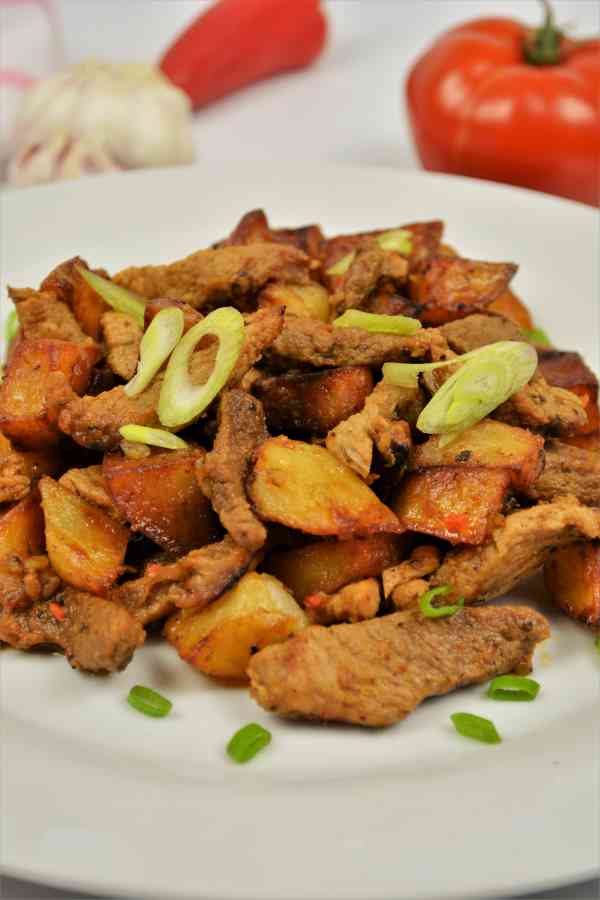
The Brasov roast recipe represents a delicious typical Hungarian recipe representing a pork stew with lots of garlic mixed with French fries and served with pickles, amazing. This dish is a lunch or dinner winner! It's super easy and crazy flavourful, so you got a give it a try.
The history of this recipe is quite controversial. There are several opinions about how this recipe was born and where its name comes from. I believe the Brasov roast recipe (Brassói aprópecsenye) originated on the train route between Budapest and Brasov, a city in Transylvania. This recipe closely resembles the version we make today.
Jump to:
Ingredients
Ready to dive into making some amazing Brasov Roast (Brassói Pecsenye)? You're in for a treat! This recipe is designed to generously serve four hungry people, so it's perfect for a family dinner or a cozy gathering. We'll be using some wonderfully simple ingredients that really sing when they come together in this classic Hungarian dish. Let's gather everything you'll need:
- 650 g Pork Shoulder: For tender, flavorful meat.
- 800 g Potatoes: For crispy exteriors and fluffy insides.
- 6 Garlic Cloves: For essential aromatic depth.
- 2 Onions: To add sweetness and foundational flavor.
- 100 g Smoked Bacon: The secret for incredible smoky richness.
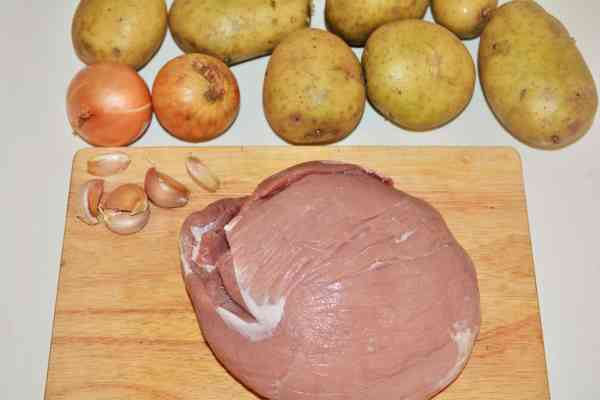
How to Make the Brasov Roast Recipe?
Now that we've gathered all our fantastic ingredients, it's time to bring this delicious Brasov Roast (Brassói Pecsenye) to life! This recipe is surprisingly straightforward, and I'm here to guide you through every step. For those who prefer to follow along visually, be sure to check out my full YouTube video tutorial right here. Let's get cooking!
Prepare the Ingredients
For the meat, you have options! You can cut it into cubes, similar to the potatoes. But this time, I'm going with strips because I prefer the texture.
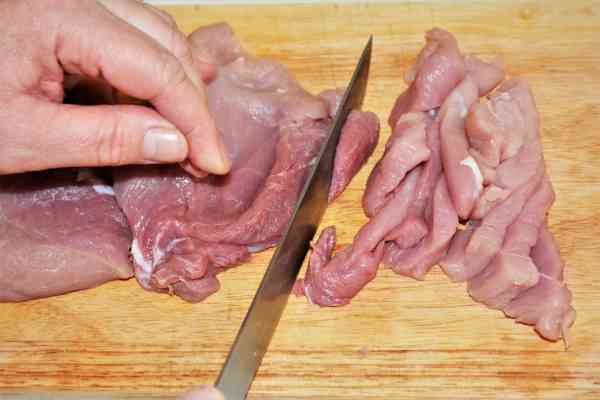
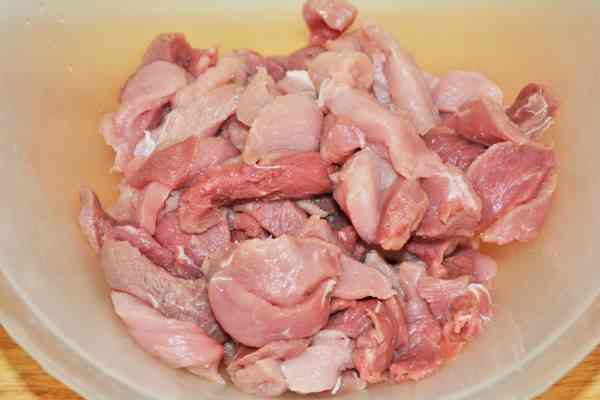
After slicing all the meat, I put it in a bowl and continued with the rest of the ingredients.
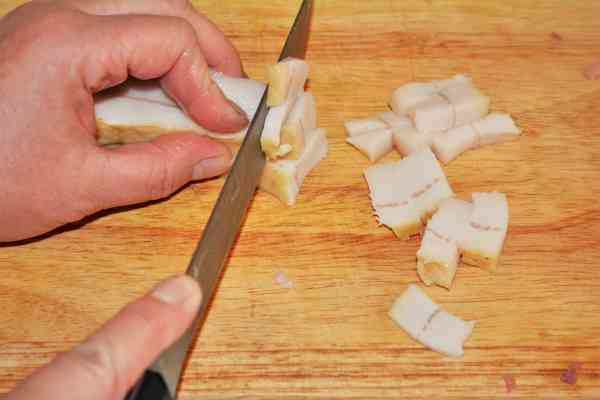
Bacon will be the first ingredient in the recipe because we will start melting it. So cut it into small pieces to melt easier and faster. As you can see, I use bacon with as little meat as possible, not at all if possible, so it will melt almost completely.
After chopping the onions and garlic, I will chop them as small as possible so they will disappear in the stew, leaving only their taste.
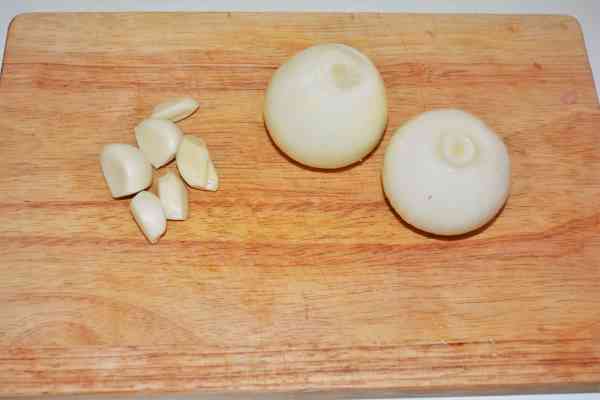
Make the Stew
To get the perfect taste, I will first melt the smoked bacon. Cut into small cubes, over medium to low heat in my cast iron dutch oven, so that the bacon does not burn, stirring constantly.
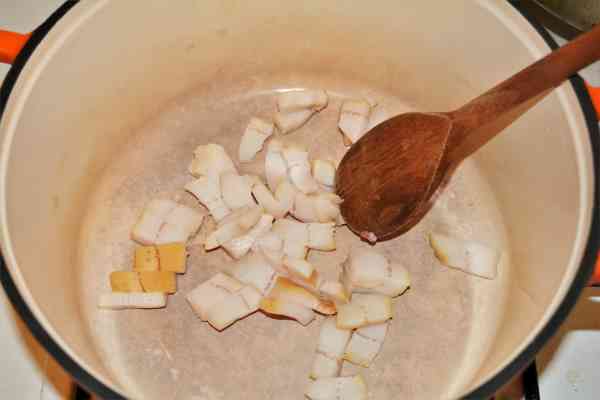
We do this until we notice that the bacon pieces become crispy, meaning they have removed all the fat. Now, whoever wants can take out the bacon bits obtained. I left them in the pot because I don't mind their taste in food; I like them.
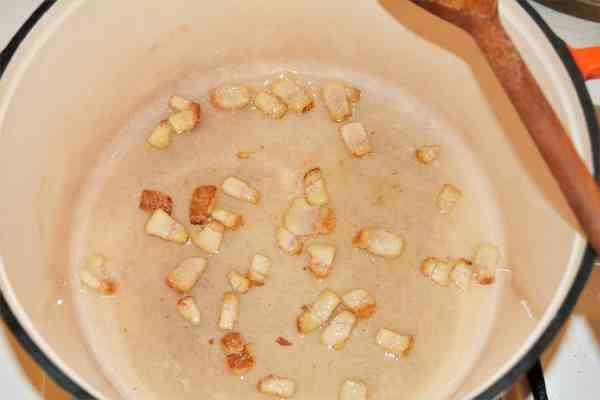
If you don't have smoked bacon or you don't want to use something like that in food, you can melt lard or goose fat. You will get good results with them as well.
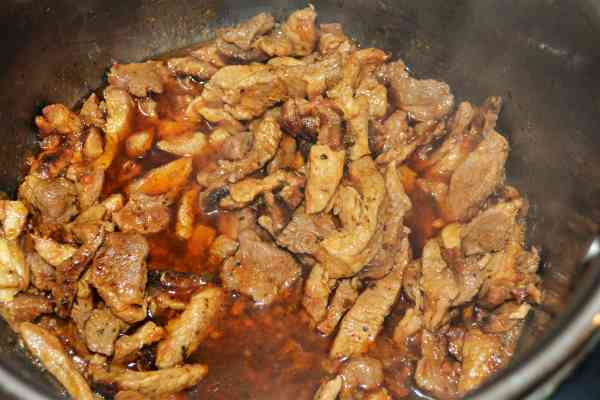
We raise the temperature to medium-high and add the meat cut into strips to fry a little in the lard and get a little colour.
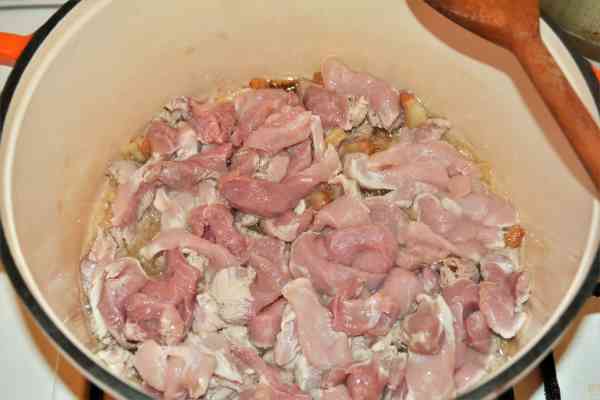
Mix with a wooden spoon and turn the pieces of meat on all sides to fry evenly for about 2-3 minutes.
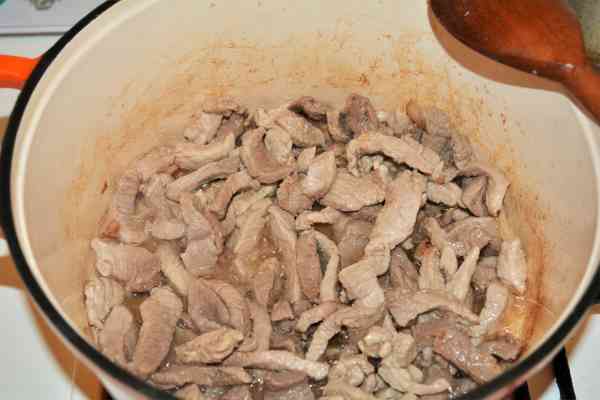
Season with a teaspoon of sea salt, half a teaspoon of freshly ground pepper, a teaspoon of Goulash paste (or sweet pepper paste) and two tablespoons of tomato passata.
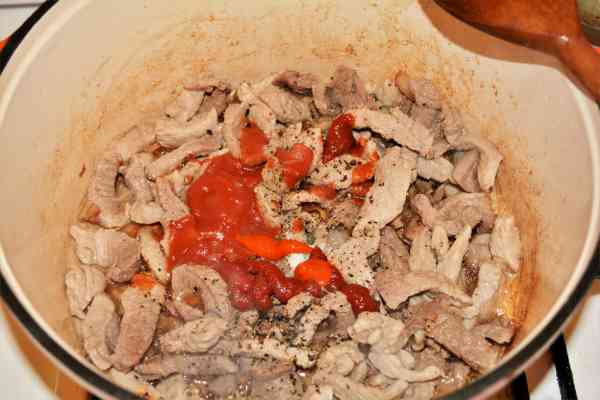
Also, now I will add the finely chopped onion and garlic.
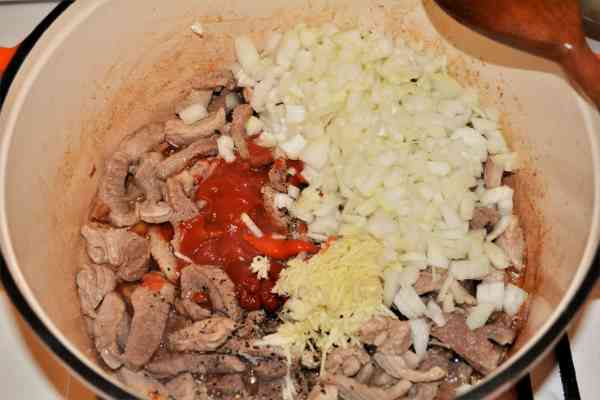
Mix everything and let it simmer in its juice for about a minute; if it doesn't have enough juice, add a little water.
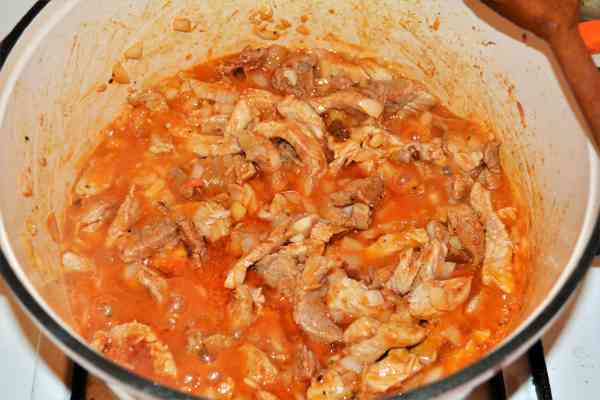
Add about half a cup of hot water and simmer for about half an hour, occasionally stirring, until the meat is cooked and soft.
Fry the Potatoes
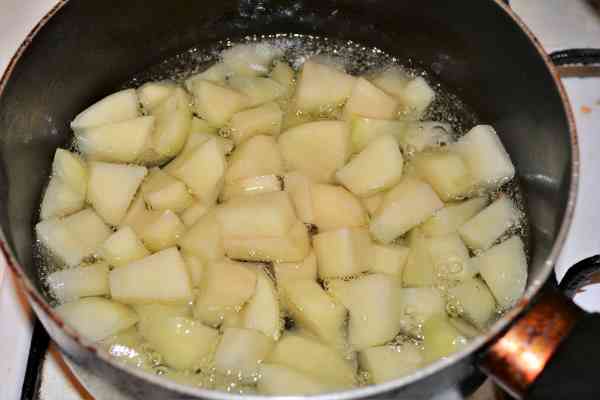
While the meat is cooking, fry the diced potatoes in sunflower oil. You can fry them either in a saucepan with a lot of oil, as I did or in a frying pan.
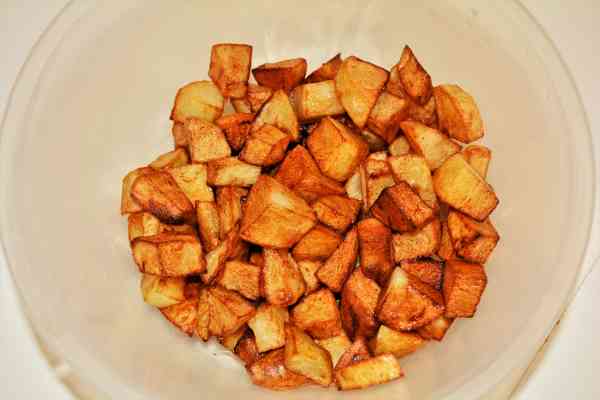
After they are fried and have a golden colour, remove them to a bowl until the pork is cooked.
Mix All Together
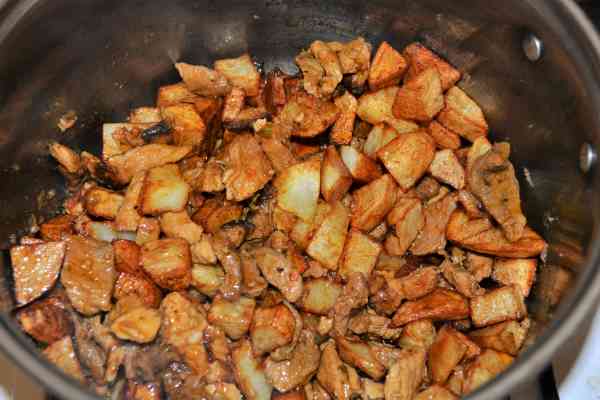
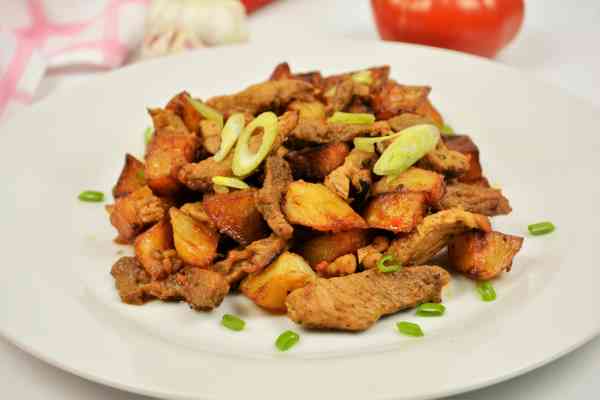
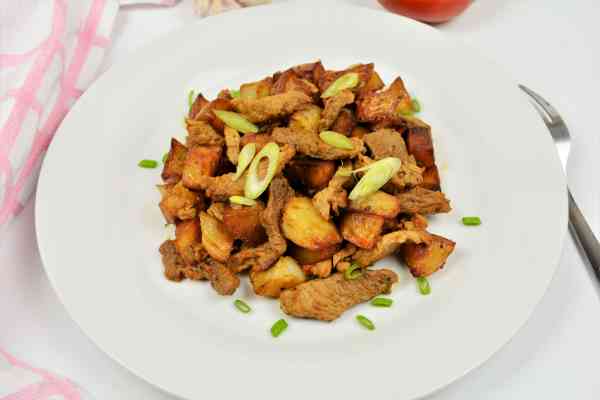
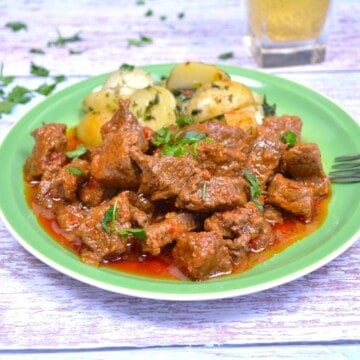
Now add the french fries over the pork stew. Mix lightly so as not to break the potatoes, and that's it, we're done, this being the famous Brasov roast recipe in my version. Let's served it!
Serving the Dish
Serve the Brasov Roast hot, sprinkle sliced spring onions on top, and serve with pickles or a cabbage or tomato salad, and it is delicious and ideal for dinner or even lunch. And, of course, a glass of cold beer can't be missed.
Storing
Storing Brasov Roast (Brassói Pecsenye) properly is key to enjoying those delicious leftovers safely! Here's how to do it:
- Once the Brasov Roast is cooked, don't leave it out at room temperature for more than two hours. This is crucial for preventing bacterial growth. Divide any large portions into smaller, shallow containers to help them cool down faster.
- Once cooled, transfer the Brasov Roast to airtight containers. This prevents contamination and keeps the food fresh.
- Store it in the refrigerator for 3 to 4 days. This is the general guideline for cooked meat and potato dishes to ensure food safety.
Reheating in the oven (around 160-180°C or 320-350°F) is often preferred to maintain the texture of both the meat and potatoes. Cover with foil to prevent drying out, and remove the foil for the last few minutes if you want to crisp up the potatoes again.
Variations
Brasov Roast, or Brassói Pecsenye, is a wonderful Hungarian classic, and like many traditional dishes, it has room for delicious variations! While the core of pork, potatoes, garlic, onion, and bacon remains, here are some ways you can cook them:
- Pan-Fried Potatoes: While your recipe likely involves pan-frying the potatoes separately for crispness, some versions might par-boil them first then finish in the pan, or even bake them in the oven alongside the meat for convenience.
- One-Pan/One-Pot Method: Some recipes integrate the potato cooking directly with the meat, simmering them together. This usually results in softer potatoes that absorb more of the meat's juices, rather than crispy ones.
- Bacon Crisps (Optional Removal): Your current recipe uses bacon for rendered fat. Some cooks remove the crispy bacon bits after rendering and only add them back in at the very end for texture, or even omit them entirely if focusing purely on the fat.
Pork is a basic ingredient and widely used in our recipes, so if you liked my Brasov roast recipe, I recommend you try the following:
- Easy Oven Baked Pork Steak Recipe
- Slow-Cooked Pork Shoulder in the Oven
- Braised Pork Knuckle Recipe
- Creamy Pork Stew Recipe
- Simple Pork Tenderloin Stew Recipe
And there you have it - your delicious Brasov Roast is ready to enjoy! We hope you loved making this classic Hungarian dish as much as we do.
For even more mouth-watering recipes inspired by the wonderful world of Hungarian cuisine and beyond, don't forget to follow us! You'll find new recipe updates and cooking inspiration daily on our:
Happy cooking, and we'll see you there!
Related

Brasov Roast Recipe: Authentic Hungarian Brassói Pecsenye
Equipment
- 1 Dutch oven pot
- 1 Frying Pan
Ingredients
- 650 g pork shoulder
- 6 cloves garlic
- 2 pieces onions medium-sized
- 800 g potatoes
- 100 g bacon smoked
- 1 teaspoon sea salt kosher
- ½ teaspoon ground pepper freshly ground
- 2 tablespoon tomato passata
- 1 teaspoon goulash pasta
- ½ cup water hot
From Fried Potatoes
- ¼ l sunflower oil
Instructions
- Melt the smoked bacon,cut into small cubes, over medium to low heat so that the bacon does not burn, stirring constantly.
- Raise the temperature to medium-high and add the meat cut into strips to fry a little in the lard and get a little colour. Turn the pieces of meat on all sides to fry evenly for about 2-3 minutes.
- Season with sea salt, freshly ground pepper, goulash paste and tomato passata and add finely chopped onion and garlic.
- Mix everything and let it simmer in its own juice for about a minute Add about half a cup of hot water and simmer for about half an hour, stirring some time.
- Fry the diced potatoes in sunflower oil, and after they are fried and have a golden colour, remove them in a bowl.
- Add the fried potatoes over the pork stew, mix lightly so as not to break the potatoes and serve it.
Video
Notes
Nutrition
This post contains affiliate links. Read the full disclosure here.