
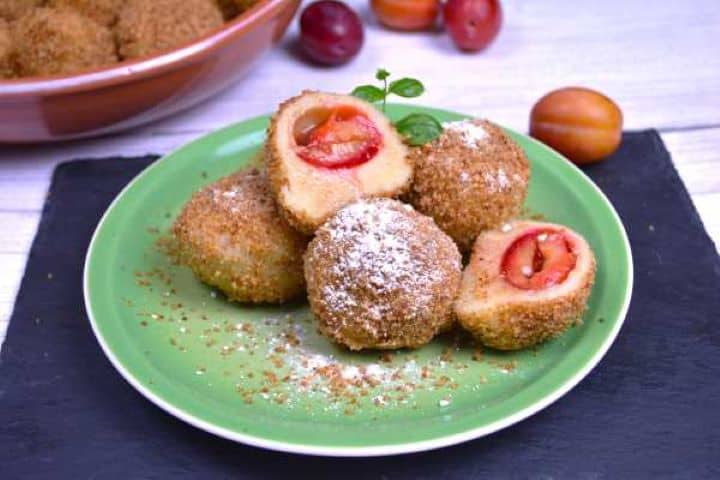
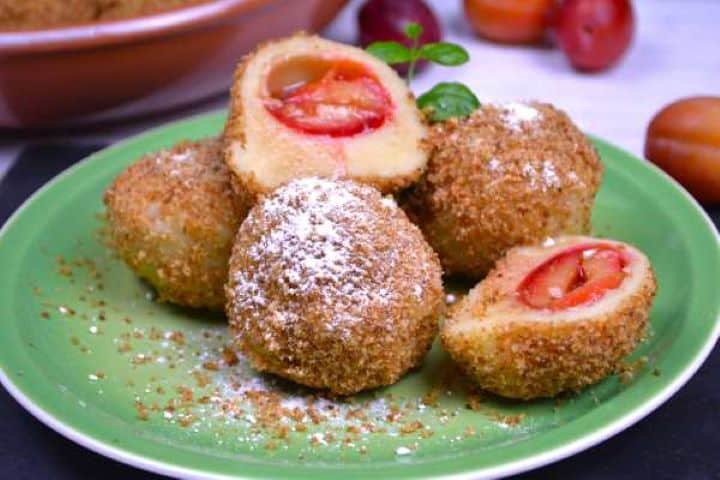
Few Central European desserts evoke as much warm nostalgia as authentic Hungarian plum dumplings, known traditionally as szilvás gombóc. Made from a delicate, gnocchi-style mashed potato dough wrapped around whole, cinnamon-sugar-stuffed plums, each dumpling is gently simmered until pillowy and soft, then rolled in a thick coating of crispy, butter-toasted breadcrumbs.
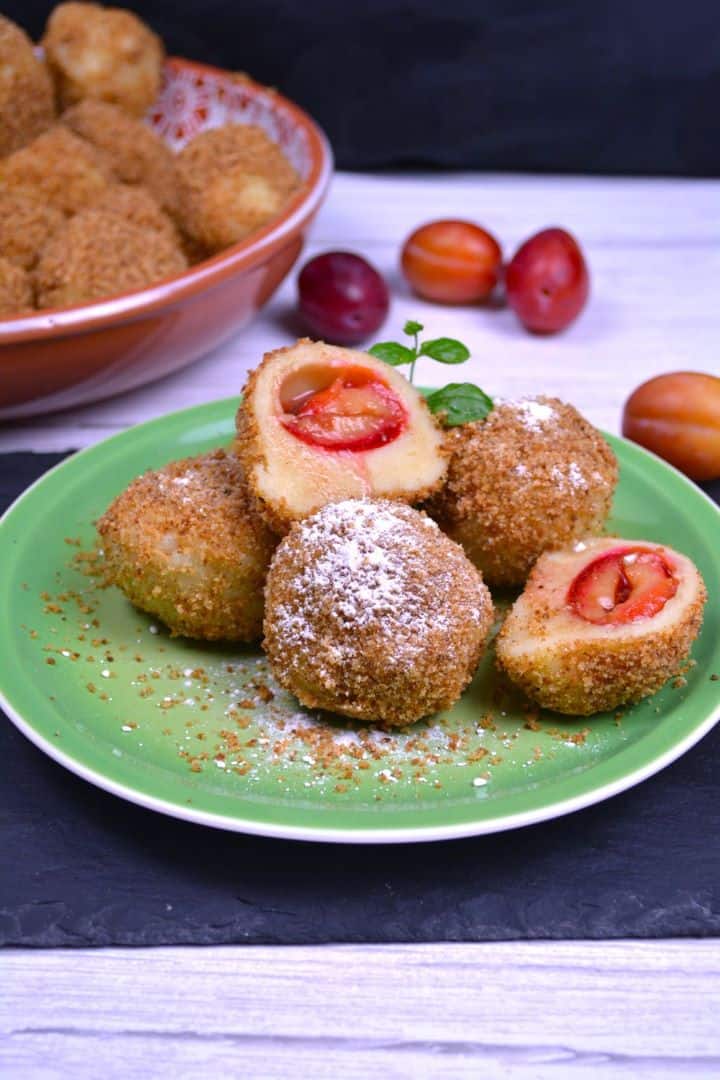
Growing up in Transylvania, late summer and early autumn always meant big bowls of warm plum dumplings dusted with vanilla-scented sugar on our kitchen table. While traditional dumpling recipes can sometimes turn out rubbery or dense, this time-tested family recipe relies on cooled, starchy riced potatoes and a small touch of coarse semolina. The result is a tender dough that seals easily, holds its shape in boiling water, and melts in your mouth with every bite.
Jump to:
- Why This Recipe Works
- What Are Hungarian Plum Dumplings?
- Key Ingredients & Substitutions
- The Ingredient Checklist
- Watch How to Make Authentic Szilvás Gombóc (Video)
- Step-by-Step Instructions: How to Make Hungarian Plum Dumplings
- Troubleshooting Common Potato Dumpling Mistakes
- Chef's Secrets for Perfect Hungarian Plum Dumplings
- How to Serve Hungarian Plum Dumplings
- Storage, Reheating & Freezing Instructions
- Frequently Asked Questions (FAQ)
- Connect with Timea's Kitchen!
- Authentic Hungarian Plum Dumplings (Szilvás Gombóc)
Why This Recipe Works
- Ultra-tender potato dough: Boiling the potatoes in their skins preserves their natural starches and prevents excess moisture, which keeps the dough light rather than gummy.
- Leak-proof sealing technique: Rolling the dough to a precise thickness and cutting it into neat squares ensures an even seal around every plum so the cinnamon juices never escape in the pot.
- Golden buttery crunch: Toasting coarse breadcrumbs slowly in melted unsalted butter provides the essential textural contrast to the soft fruit and dumpling exterior.
- Make-ahead friendly: These dumplings can be shaped and frozen raw, allowing you to drop them straight into boiling water whenever a craving hits.
What Are Hungarian Plum Dumplings?
Plum dumplings-often referred to broadly across Central and Eastern Europe as knedle-date back to the Austro-Hungarian Empire. While you will find them called Zwetschkenknödel in Austria, Szilvás gombóc in Hungary, and Gomboți cu prune in Romania, the core concept remains wonderfully consistent: a tender potato dough wrapped around fresh fruit, gently simmered, and rolled in butter-toasted breadcrumbs.
Though some regional variations use yeasted dough or choux pastry, the classic version relies on a rich, gnocchi-style potato base made from mashed potatoes, flour, and eggs. Traditional fillings range from Italian prune plums to sweet apricots. In this recipe, I'll show you how we prepare them here in Transylvania-honoring the traditional family method while refining the flour ratios and adding semolina for an unbeatable, melt-in-your-mouth texture.
Key Ingredients & Substitutions
Getting the dough texture right comes down to starch and moisture control. Using the proper potato variety and flour type makes the difference between soft, tender dumplings and heavy, rubbery ones.
Ingredient Notes
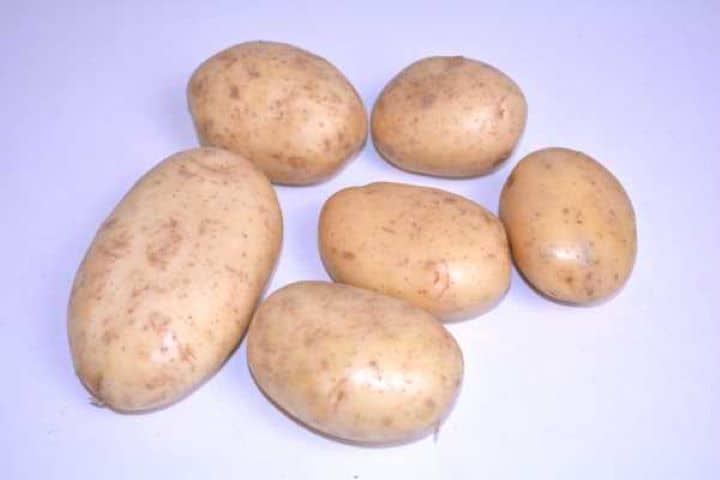
- Starchy (Floury) Potatoes: Use high-starch varieties such as Russet, Yukon Gold, or Maris Piper (or Agria in Europe). Avoid waxy salad potatoes or red-skinned potatoes; their high moisture content requires adding excessive flour, resulting in tough, dense dough.
- All-Purpose Flour (Plain Flour): Never use self-raising flour, as leavening agents cause the dumplings to swell, crack, and dissolve while boiling. Measure your flour, but add it gradually-the exact amount always depends on how much moisture your potatoes retain.
- Coarse Semolina (Gríz): Adding two tablespoons of coarse semolina provides structure and chew without requiring extra wheat flour, ensuring the dumplings stay light and hold together in the pot.
- Italian Prune Plums (Zwetschgen): Small, oblong European prune plums (or Damson plums) work best because they are freestone (the pit releases cleanly) and contain less water than large round eating plums. If you can only find larger plums, halve or quarter them so the dumplings remain manageable in size.
- Fine Breadcrumbs: Standard unseasoned dry breadcrumbs crisp up beautifully in melted butter. Avoid coarse panko, which does not cling evenly to boiled potato dough.
- Butter: Unsalted butter provides a clean, rich foundation for toasting the breadcrumbs and adds softness to the warm dough.
- Cinnamon Sugar & Vanilla Sugar: A small pinch of cinnamon sugar placed inside each plum balances the natural tartness of the fruit as it bakes inside the dumpling.
The Ingredient Checklist
For the Potato Dough
- 1 kg (2.2 lbs) starchy potatoes, boiled whole in their skins and peeled
- 450-500 g (3½ to 4 cups) all-purpose flour, plus extra for dusting
- 2 tablespoon coarse semolina
- 2 large eggs, room temperature
- 100 g (7 tbsp) unsalted butter, softened to room temperature
- ½ teaspoon fine sea salt
For the Plum Filling
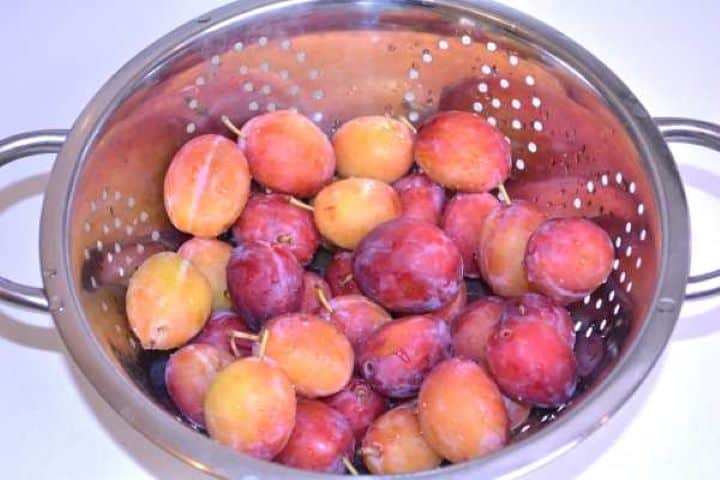
- 30-35 small Italian prune plums, washed and dried
- 3 tablespoon granulated sugar (or caster sugar)
- 1 teaspoon ground cinnamon
For the Crispy Breadcrumb Coating
- 300 g (3 cups) fine plain breadcrumbs
- 100 g (7 tbsp) unsalted butter
- 2 tablespoon powdered sugar (plus extra vanilla sugar for dusting before serving)
Watch How to Make Authentic Szilvás Gombóc (Video)
If you have never worked with potato dough before, watching the technique in action takes away all the guesswork. In the video below, I walk you through the entire process step by step-from testing the dough's softness and shaping the dumplings without tearing, to getting that signature golden-copper crunch on your toasted breadcrumbs.
Step-by-Step Instructions: How to Make Hungarian Plum Dumplings
Follow these steps carefully, paying close attention to the potato cooling time and gentle simmer speed to keep your dumplings light, intact, and tender.
1: Boil, Peel, and Mash the Potatoes
- Place 1 kg (2.2 lbs) of whole, unpeeled starchy potatoes in a large pot and cover with cold water.
- Bring to a boil over medium-high heat and cook for 30 to 40 minutes, or until a knife slides easily into the center of the largest potato.
- Drain the water completely. Let the potatoes cool just enough so you can handle them, then peel off the skins while they are still warm.
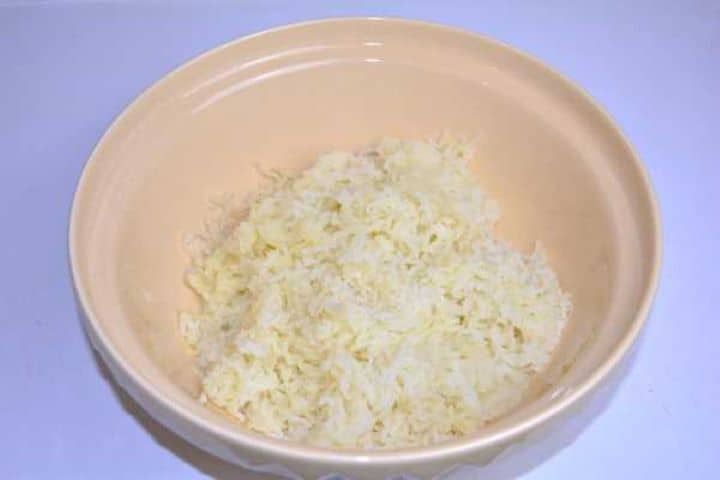
- Pass the potatoes through a potato ricer (or mash thoroughly with a handheld masher) into a large bowl. Spread the mashed potatoes out along the sides of the bowl and let them cool completely to room temperature (about 45-60 minutes).
Pro Tip: Never mix hot or warm potatoes with flour and raw eggs. Warm potatoes melt the butter and break down starches, creating a sticky, gluey paste that demands too much flour.
2: Prep the Plums and Cinnamon Sugar
- Wash and thoroughly dry 30-35 small Italian prune plums.
- Using a small paring knife, make a lengthwise slit along one side of each plum. Gently pry it open just enough to remove the stone, keeping both halves attached at the stem or base.
- In a small bowl, whisk together 3 tablespoons of sugar and 1 teaspoon of ground cinnamon.
- Spoon approximately ½ to 1 teaspoon of the cinnamon sugar mixture into the hollow pit cavity of each plum. Press the halves back together lightly and set aside.
3: Toast the Golden Breadcrumb Coating
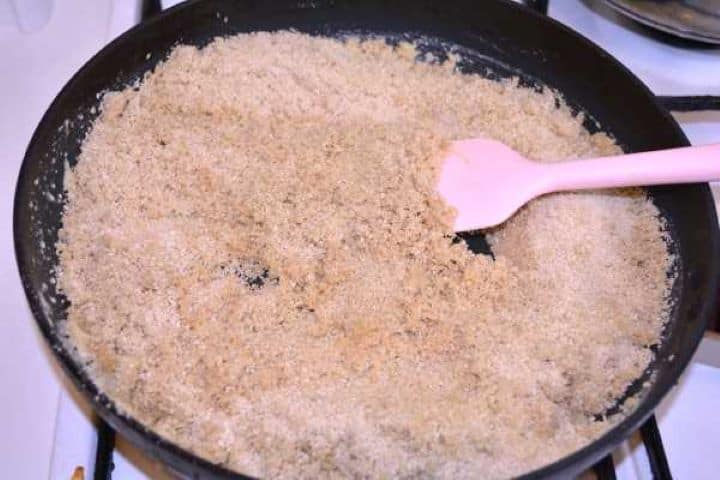
- In a wide, heavy-bottomed skillet, melt 100 g (7 tbsp) of unsalted butter over medium-low heat.
- Add 300 g (3 cups) of fine plain breadcrumbs and stir continuously with a wooden spoon or spatula.
- Toast for 6 to 8 minutes until the breadcrumbs turn an even, copper-amber color and release a nutty, buttery aroma.
- Remove the skillet from the heat immediately to stop the cooking. Stir in 2 tablespoons of powdered sugar and set aside in a warm spot.
4: Mix and Knead the Potato Dough
- Bring a large, wide stockpot filled with water and 2 teaspoons of fine sea salt to a gentle boil on the stove.
- In the bowl with your cooled riced potatoes, add 2 room-temperature eggs, 100 g softened butter, 2 tablespoons coarse semolina, and ½ teaspoon fine sea salt.
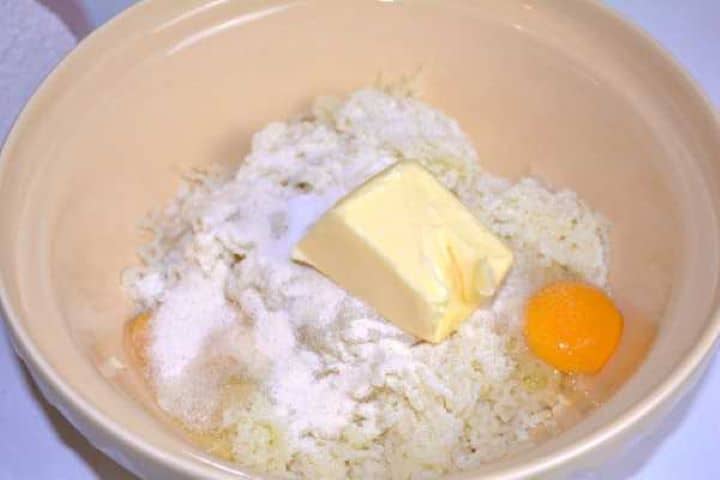
- Add about half of the all-purpose flour (roughly 250 g).
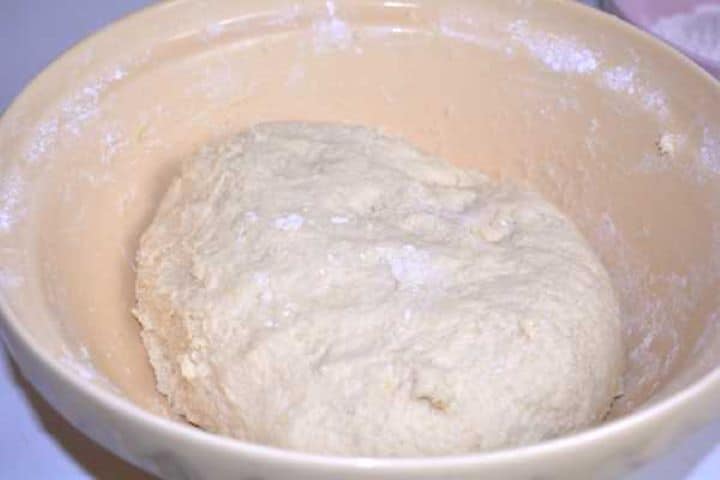
- Begin bringing the ingredients together using your hands. Gradually work in the remaining flour in small batches until a soft, cohesive dough forms that pulls away cleanly from the bowl.
Important: Stop kneading as soon as the dough holds together. The dough should feel soft, tender, and slightly tacky. Over-kneading develops gluten and yields rubbery dumplings.
5: Roll, Cut, and Shape
- Generously dust a large wooden board or clean countertop with all-purpose flour.
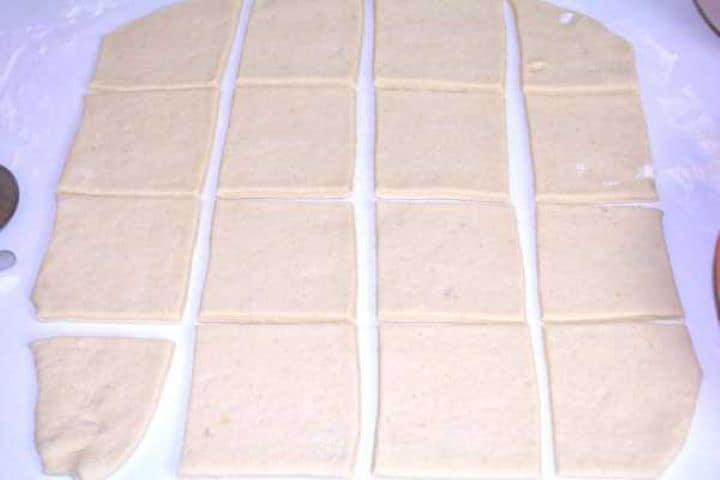
- Turn the dough out and gently roll it with a floured rolling pin to an even thickness of 0.5 cm (about ¼ inch).
- Using a pastry wheel or sharp knife, cut the dough into equal squares measuring roughly 7 x 7 cm (about 3 x 3 inches).
- Place one spiced plum in the center of each dough square.
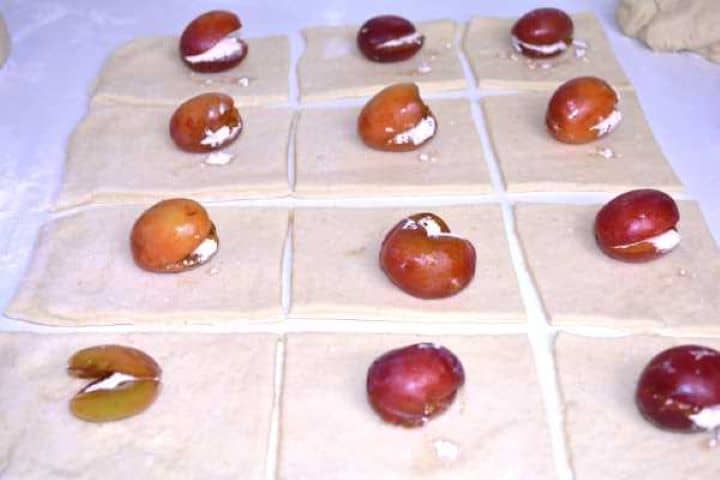
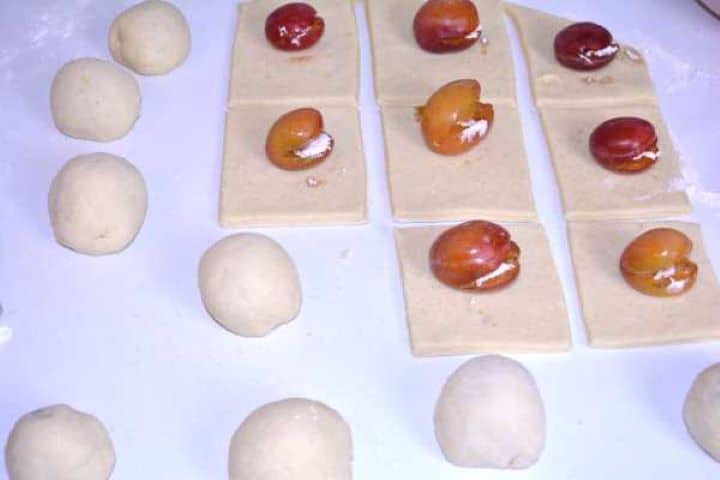
- Bring the four corners of the dough up around the fruit. Pinch all open seams tightly together to fully enclose the plum and trap the juices.
- Lightly dust your palms with flour and gently roll the dumpling between your hands into a smooth, seamless sphere. Repeat with the remaining dough and plums.
6: Simmer the Dumplings
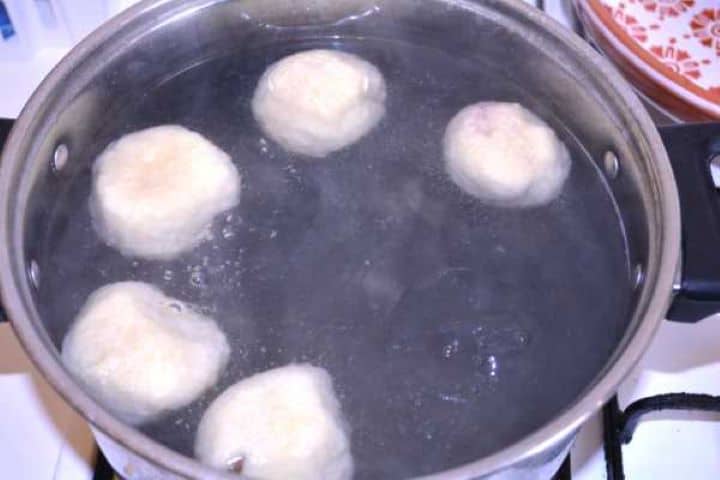
- Reduce the heat under your pot of boiling water so it maintains a steady, gentle simmer with small bubbles breaking the surface (never a violent, rolling boil).
- Carefully lower 6 to 8 dumplings into the pot at a time using a slotted spoon, making sure not to overcrowd the pot.
- If any dumplings settle on the bottom, gently nudge them with a wooden spoon so they do not stick.
- Once the dumplings float to the surface, let them simmer gently for another 2 to 3 minutes until the dough is cooked through and pillowy.
7: Coat and Serve
- Lift the cooked dumplings out of the water with a slotted spider or spoon, letting the excess water drain off for 2-3 seconds.
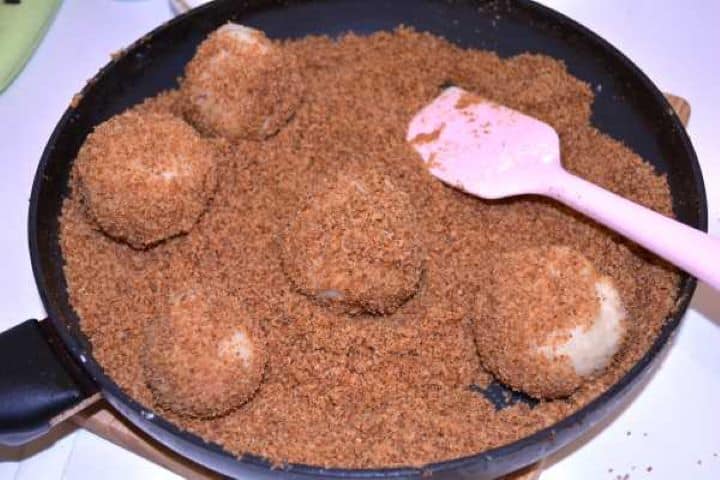
- Transfer them directly into the skillet with your warm toasted breadcrumbs.
- Gently roll and spoon the breadcrumbs over the dumplings until every side is generously and evenly coated.
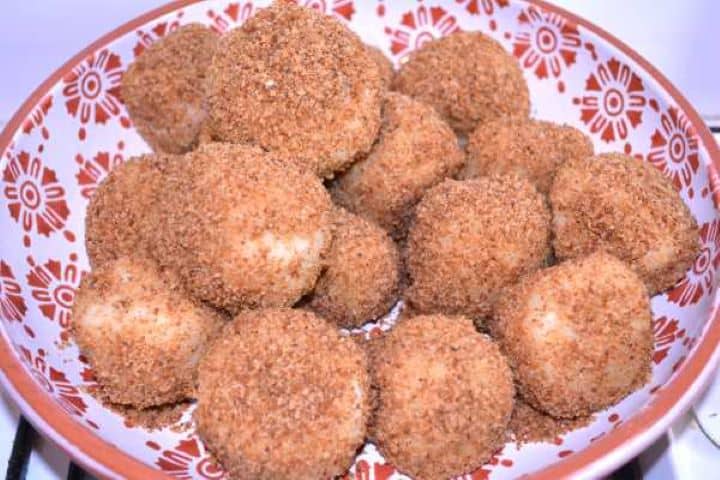
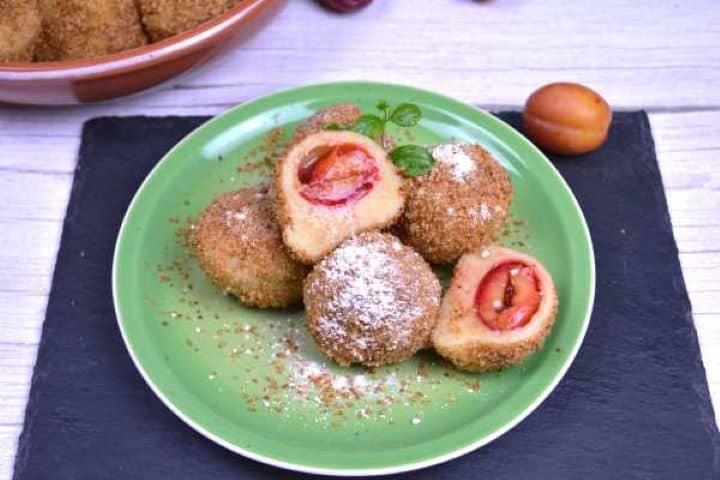
- Transfer to a serving platter, dust generously with powdered sugar (or vanilla sugar) and a dash of extra cinnamon, and serve warm.
Troubleshooting Common Potato Dumpling Mistakes
Working with fresh potato dough requires a light touch. If your dumplings do not turn out as expected, here is how to diagnose and fix the issue:
Why are my dumplings tough, dense, or gummy?
- Warm potatoes were used: If the potatoes are still warm when you mix in the eggs, butter, and flour, the starches gelatinize prematurely and turn into a sticky paste. This tricks you into adding too much flour, yielding dense, heavy dumplings. Always let the riced potatoes cool completely to room temperature.
- Over-kneading the dough: Potato dough is not bread dough. Once you add the flour, mix only until the dough comes together into a cohesive ball. Over-handling activates gluten, turning tender dumplings rubbery.
- The wrong potato variety: Waxy salad potatoes hold too much moisture and lack the dry, fluffy starch needed to absorb the flour naturally. Stick strictly to high-starch varieties like Russet, Idaho, or Yukon Gold.
Why did my dumplings burst or fall apart in the water?
- The water was boiling too violently: A rapid, rolling boil physically tosses the dumplings around, battering them against the pot walls and breaking the delicate potato casing. Keep the water at a gentle simmer with small, steady bubbles.
- Unsealed seams: When wrapping the plum, any air pocket or loose seam will expand in hot water, causing the dumpling to burst. Pinch all edges firmly together and roll the ball gently between your palms to smooth out cracks before dropping it in the pot.
- The dough was rolled too thin: While you do not want a thick, heavy shell, rolling the dough thinner than 0.5 cm (¼ inch) leaves it vulnerable to tearing as the plum releases steam during cooking.
The dough feels too sticky to shape-should I add more flour?
Add flour very conservatively-only one tablespoon at a time. The dough should naturally feel slightly tacky. Instead of dumping cups of flour into the bowl (which makes the dough dense), dust your work surface generously and keep your palms lightly coated with flour while rolling each ball.
Chef's Secrets for Perfect Hungarian Plum Dumplings
- Use a potato ricer, not a blender or food processor: Electric blades sheer potato starches, instantly turning them into a gluey texture that cannot be saved. A handheld potato ricer ensures a lump-free, aerated texture without damaging the starch structure.
- Run a single test dumpling: Before shaping all 35 dumplings, cut a small piece of dough, roll it into a plain ball, and drop it into simmering water. If it floats and stays intact after 3 minutes, your flour-to-potato ratio is spot on. If it softens and loses its shape, knead an extra 2 to 3 tablespoons of flour into the main batch.
- Choose firm, freestone plums: Soft, overripe plums leak excess liquid into the dough before you even reach the stove. Look for firm Italian prune plums (Italian prune or Damson) whose flesh separates cleanly from the pit.
How to Serve Hungarian Plum Dumplings
Hungarian plum dumplings are best enjoyed warm, straight from the breadcrumb skillet, when the dumpling skin is tender, the crumb coating is still crisp, and the plum inside is hot and juicy.
In Hungarian and Transylvanian homes, szilvás gombóc is so hearty that it is rarely served only as a light dessert. It frequently doubles as a sweet main course, traditionally following a sour or savory soup such as a rich bean soup (bableves) or potato soup.
Traditional Toppings & Pairing Ideas
- Vanilla Sugar & Cinnamon Dusting: The quintessential finish. Dust generously with powdered sugar mixed with bourbon vanilla or a pinch of ground cinnamon right before serving.
- Sweetened Sour Cream (Tejföl): A favorite Central European pairing. Whisk thick sour cream with a spoonful of powdered sugar and serve alongside the warm dumplings; the cool tang cuts through the rich butter and sweet fruit.
- Warm Vanilla Custard Sauce (Vaníliasodó): Serve the dumplings in shallow bowls pooled with silky, warm vanilla custard sauce for a comforting Austrian-style treat.
- Spiced Plum Butter (Szilvalekvár): A small dollop of dense, unsweetened plum jam on the side reinforces the deep fruit flavor.
More Traditional Central European Recipes
If you love authentic sweet treats and comforting home baking, try these classic favorites from our kitchen:
- Best Hungarian Cottage Cheese Dumplings (Túrógombóc) - Fluffy farmer's cheese dumplings rolled in golden crumbs.
- Authentic Hungarian Császármorzsa - Shredded semolina pancakes (Kaiserschmarrn) dusted with powdered sugar.
- Hungarian Apple Shortcrust Pastry (Almás Pite) - Spiced apple filling sandwiched between melt-in-your-mouth pastry layers.
- Sweet Fried Semolina Pudding (Rántott tejbegríz) - A nostalgic childhood breakfast and dessert.
Storage, Reheating & Freezing Instructions
How to Store Leftovers
- Refrigeration: Store cooked, breadcrumb-coated dumplings in an airtight container in the refrigerator for up to 3 days.
- Reheating: The microwave works in a pinch (30-45 seconds on medium power), but it can make the breadcrumb coating soft. For best results, reheat them in a non-stick skillet over low heat with a tiny pat of butter, rolling them gently until warmed through and crisp again.
Can You Freeze Plum Dumplings?
Yes, but always freeze them uncooked and uncoated:
- Shape the dumplings completely with the spiced plums sealed inside.
- Arrange the raw dumplings in a single layer on a parchment-lined baking sheet, making sure they do not touch.
- Freeze for 2 to 3 hours until rock-solid.
- Transfer the frozen dumplings into a heavy-duty freezer bag or airtight container, label with the date, and freeze for up to 3 months.
- How to cook from frozen: Do not thaw before cooking. Drop the frozen dumplings directly into a large pot of gently simmering salted water. Because they are frozen, add 2 to 3 extra minutes to the simmer time after they float to the surface. Roll them immediately in freshly toasted breadcrumbs.
Frequently Asked Questions (FAQ)
The best plums are Italian prune plums (also known as Empress, Damson, or Zwetschgen). They are firm, oblong, freestone (the pit detaches cleanly without tearing the fruit), and contain significantly less moisture than large, round dessert plums. If you only have large red or black plums, cut them into halves or quarters and pat them dry thoroughly before wrapping them in the dough.
Yes. You have three great options outside of late summer and early autumn:
- Thawed frozen prune plums: Thaw halved plums completely on paper towels and pat them completely dry so excess water does not dissolve the dough from the inside.
- Plum butter / jam (Szilvalekvár): Use a firm, thick, traditional unsweetened plum jam. Spoon a teaspoon of cold jam into the center of each dough square instead of fresh fruit.
- Apricots (Sárgabarackos gombóc): Follow the exact same dough and cooking method using small, halved fresh apricots stuffed with a sugar cube or cinnamon sugar.
You should not leave raw, filled dumplings sitting at room temperature or in the refrigerator for more than 15-20 minutes before cooking, as the moisture from the plums and potatoes will make the dough sticky and soggy. If you need to make them in advance, shape and freeze them raw on a baking sheet, then cook them directly from frozen when you are ready to serve.
Boiling potatoes whole in their jackets prevents them from absorbing excess cooking water. When potatoes are peeled and cubed before boiling, they take on substantial water weight, which forces you to knead in large quantities of raw flour. Too much flour alters the balance of the dough, leaving you with heavy, dense dumplings instead of light, pillowy ones.
In Hungary and across Central Europe, sweet dumplings are often served as a sweet main course following a hearty, savory soup (such as goulash, bean soup, or split pea soup). However, they are equally popular served as a decadent afternoon treat or dessert after dinner.
Yes. Substitute the unsalted butter in both the dough and the breadcrumb coating with high-quality European-style vegan block butter or neutral vegetable oil (such as sunflower oil). Keep the breadcrumbs stirred continuously, as oil will toast breadcrumbs faster than butter.
Connect with Timea's Kitchen!
Did you make these authentic Hungarian plum dumplings? We would love to hear how they turned out! Please leave a 5-star rating and a review in the comments below-your feedback helps other home cooks discover our recipes and means the world to our kitchen.
- Share your creations: Snap a photo of your golden dumplings and tag @TimeasKitchen on Instagram and Facebook.
- Save for later: Pin this recipe to your favorite dessert boards on Pinterest so you always have it ready for plum season.
- Subscribe on YouTube: For more step-by-step Transylvanian and Central European family recipes, subscribe to our YouTube channel and never miss a new video!

Authentic Hungarian Plum Dumplings (Szilvás Gombóc)
Equipment
- 1 Large stockpot for boiling
- 1 Wide heavy-bottomed skillet for breadcrumbs
- 1 Rolling Pin
- 1 Handheld potato ricer or potato masher
- 1 Pastry wheel or sharp chef's knife
- 1 Slotted Spoon or spider skimmer
Ingredients
For the Potato Dough
- 1 kg potatoes starchy, Russet, Idaho, or Yukon Gold; boiled whole in skins
- 500 g all-purpose flour plain flour, divided; plus extra for dusting
- 2 tablespoon semolina coarse
- 2 pieces eggs free-range, room temperature
- 100 g butter unsalted, softened to room temperature
- ½ teaspoon sea salt fine
For the Plum Filling
- 35 pieces small plums freestone/Damson; washed, dried, and pitted
- 3 tablespoon sugar granulated
- 1 teaspoon cinnamon ground
For Boiling & Serving
- 4 l water
- 2 teaspoon sea salt fine, for boiling water
- 2 tablespoon powdered sugar or vanilla sugar (for dusting before serving)
- ½ teaspoon ground cinnamon optional dusting
For the Breadcrumb Coating
- 100 g butter unsalted
- 300 g breadcrumbs fine plain dry
- 2 tablespoon sugar powdered
Instructions
1. Boil and Rice the Potatoes
- Place whole, unpeeled potatoes into a large pot and cover with cold water. Bring to a boil and cook for 30-40 minutes until tender all the way through when pierced with a fork.
- Drain immediately. Peel the skins off while the potatoes are still warm.
- Pass peeled potatoes through a potato ricer into a wide mixing bowl. Spread the mashed potatoes out to allow steam to escape and let cool completely to room temperature (about 45-60 minutes).
2. Prepare the Fruit
- Slice each plum lengthwise along one side, keeping the opposite hinge intact, and remove the pit.
- In a small bowl, mix 3 tablespoons granulated sugar with 1 teaspoon ground cinnamon.
- Fill the cavity of each plum with ½ to 1 teaspoon of cinnamon sugar. Gently press the halves together and set aside.
3. Toast the Breadcrumbs
- Melt 100 g unsalted butter in a wide skillet over medium-low heat.
- Add 300 g breadcrumbs and toast, stirring constantly, for 6-8 minutes until evenly copper-brown and fragrant.
- Remove from heat immediately, stir in 2 tablespoons powdered sugar, and set aside in a warm spot.
4. Mix and Shape the Dough
- Bring 3-4 liters of water and 2 teaspoons of salt to a gentle simmer in a large stockpot.
- To the cooled potatoes, add eggs, softened butter, semolina, and ½ teaspoon salt. Add half the flour (approx. 250 g) and begin mixing by hand.
- Gradually add the remaining flour just until a soft, pliable dough forms that clears the sides of the bowl. Stop kneading immediately-do not overwork.
- Dust your work surface well with flour. Roll the dough out to an even thickness of 0.5 cm (¼ inch). Cut into squares roughly 7 x 7 cm (3 x 3 inches).
- Place a stuffed plum in the center of each square. Bring the four corners together, pinch all seams firmly shut to lock in juices, and roll gently between floured palms into a smooth sphere.
5. Simmer and Coat
- Gently lower 6-8 dumplings at a time into simmering water with a slotted spoon.
- When the dumplings float to the top, lower the heat slightly and simmer gently for an additional 2-3 minutes until cooked through.
- Remove with a slotted spoon, shake off excess water, and transfer directly into the skillet with toasted breadcrumbs.
- Roll until completely covered on all sides. Transfer to a serving platter, dust generously with vanilla sugar and cinnamon, and serve warm.
Video
Notes
- Flour Selection: Never substitute self-raising flour. Leaveners cause the dough to expand, crack, and disintegrate in the boiling water. Use standard unbleached all-purpose or plain flour.
- Potato Starch & Moisture: High-starch potatoes (like Russets) boiled in their skins absorb far less water than peeled, cubed potatoes, keeping your dough light and pillowy rather than dense.
- Make-Ahead & Freezing: Do not refrigerate uncooked filled dumplings (the fruit will make the raw dough soggy). Instead, arrange uncooked dumplings on a parchment-lined baking sheet and freeze for 2 hours until solid, then transfer to a freezer bag for up to 3 months. Cook directly from frozen in gently simmering water, adding 2-3 extra minutes to the cook time after they float.
Nutrition
This post contains affiliate links. Read the full disclosure here.