
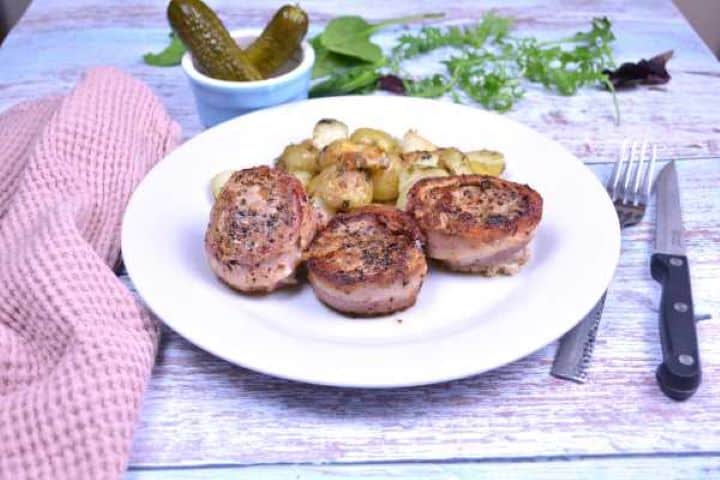
These pan-seared bacon wrapped pork medallions are melt-in-your-mouth tender, rich with smoky flavor, and on the table in under 25 minutes. Pork tenderloin is the leanest, most delicate cut of pork, which means it cooks in minutes-but without care, it can turn dry and tough in a flash. Wrapping the tenderloin tightly in smoked bacon provides built-in moisture and a crisp outer crust while keeping the pork center juicy and succulent.
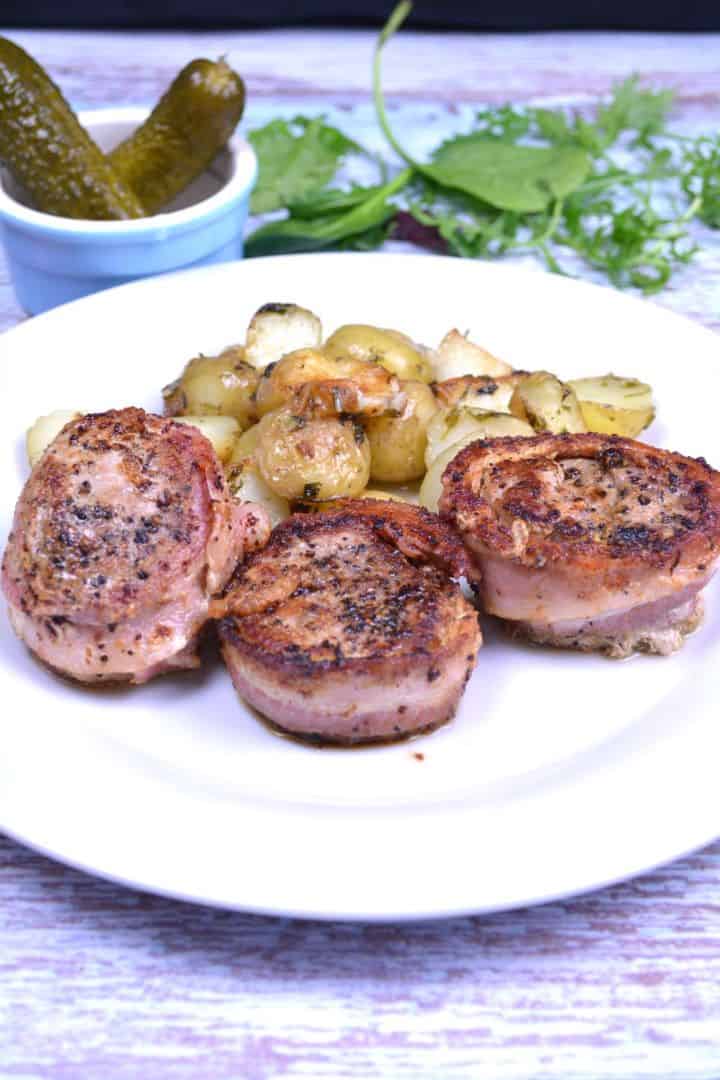
A light coating of sharp English mustard does double duty by balancing the rich bacon and acting as natural glue to keep every slice intact. Finished in a hot skillet with foaming butter and fresh sprigs of thyme for basting, this restaurant-quality dish looks impressive on a dinner party platter yet takes little effort on a busy weeknight.
Jump to:
- Why This Recipe Works
- Key Ingredients & Substitutions
- Pro Kitchen Tips for Juicy Pork Medallions
- Watch the Video Tutorial
- Step-by-Step Instructions
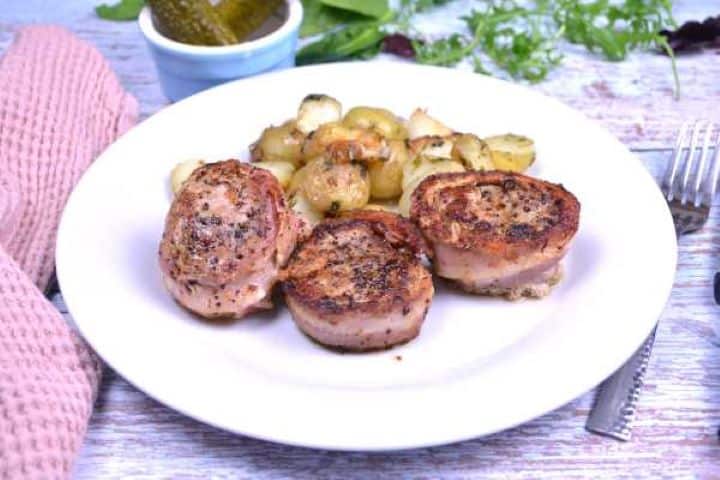
- What to Serve with Pork Medallions
- How to Store, Freeze, and Reheat Pork Medallions
- Frequently Asked Questions
- More Juicy Pork Recipes You'll Love
- Join Our Kitchen Community!
- related
- Juicy Bacon-Wrapped Pork Medallions
Why This Recipe Works
- The "Wrap-First, Slice-Second" Method: Wrapping the whole tenderloin in overlapping bacon before securing it with toothpicks and slicing ensures every medallion has tight, uniform bacon coverage that will not slide off in the pan.
- Mustard as a Flavor Binder: Sharp English mustard does not make the dish taste spicy; instead, it cuts through the rich pork fat while acting as a natural binder that helps the bacon adhere closely to the meat.
- Fast Pan-Sear with Butter Basting: Frying the medallions over medium-high heat for just 3 minutes per side crisps the bacon edges rapidly without overcooking the lean tenderloin core. Basting with foaming butter and fresh thyme adds an herb-infused pan glaze.
- Guaranteed Juiciness with Rest Time: Pork tenderloin dries out when cooked past 145°F (63°C). A short 5 to 6-minute rest off the heat allows the muscle fibers to relax and reabsorb all the flavorful cooking juices.
Key Ingredients & Substitutions
Simple ingredients yield exceptional flavor when prepared with proper technique.
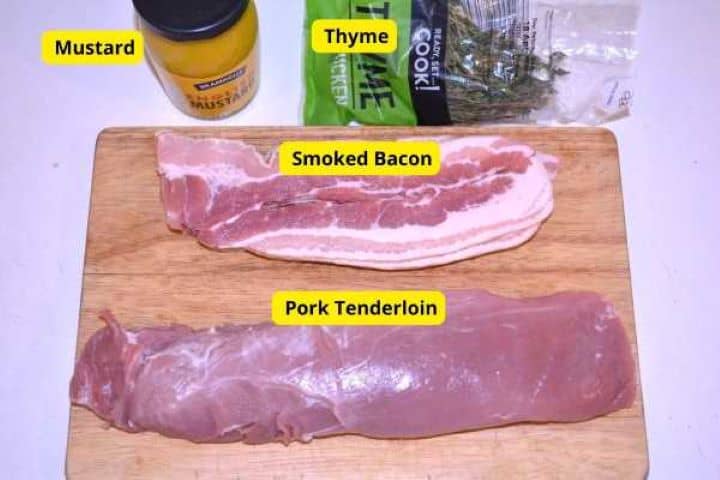
- Pork Tenderloin (Pork Fillet): You need one whole tenderloin of approximately 500 g. Look for a uniform shape so the medallions cook at an even rate. Substitutions: Pork loin can be sliced into medallions, but tenderloin is significantly more tender and cooks faster.
- Smoked Bacon: Streaky bacon (thin-cut) works best here because it wraps neatly and crisps up quickly in the pan without undercooking. The smoke complements the lean pork. Substitutions: Unsmoked streaky bacon works well if you prefer a milder flavor, or prosciutto for an Italian-style twist (reduce cooking time slightly as prosciutto crisps very fast).
- English Mustard: Provides a sharp, tangy bite that cuts through the rich bacon fat, while acting as a culinary glue to keep the bacon adhering to the meat during slicing and searing. Substitutions: Dijon mustard is a milder direct replacement; wholegrain mustard adds pleasant texture.
- Fresh Thyme: Sprigs thrown directly into the hot foaming butter infuse the pan sauce with woodsy aromatics. Substitutions: Fresh rosemary sprigs or fresh sage leaves.
- Unsalted Butter: Used at the very end of searing for French-style basting (arrosé), coating the meat with rich gloss and nutty pan flavor. Substitutions: Ghee or clarified butter.
- High-Smoke Point Cooking Oil: Sunflower oil, vegetable oil, or light olive oil to get the pan hot enough for a rapid sear without smoking or burning.
- Sea Salt & Freshly Ground Black Pepper: Keep the salt modest; the bacon and mustard already contribute a fair amount of sodium to the finished medallions.
Pro Kitchen Tips for Juicy Pork Medallions
- Remove the Silverskin First: Pork tenderloin has a shiny, tough connective membrane running along part of the surface. Slip the tip of a sharp paring knife underneath it and slide along the meat to remove it. Silverskin does not break down during quick pan-searing and will cause the medallions to curl and turn chewy.
- Use Half-Toothpicks for Clean Slicing: Securing the bacon roll with halves of wooden toothpicks at 2 to 2.5 cm (1 inch) intervals before slicing gives clean, restaurant-style rounds. A sharp chef's knife or slicing knife prevents tearing the raw bacon strips.
- Don't Overcrowd the Skillet: Cook the medallions in a single layer with space between each piece. If the pan is overcrowded, the pork will release moisture and steam instead of searing, leaving the bacon flabby rather than crisp. Fry in two batches if your pan is under 28 cm.
- Baste with Foaming Butter (Arrosé): Add the butter and thyme during the final 3 minutes of cooking. Tilt the pan slightly and use a tablespoon to spoon the foaming herb butter continuously over the tops of the medallions to keep them moist and glossy.
- Monitor the Internal Temperature: Pork tenderloin is safe and at its juiciest at 145°F (63°C), which presents a faint, pale pink center. Pull the medallions from the pan when an instant-read thermometer reads 140°F (60°C); carryover heat during resting will bring them to the ideal temperature.
- Rest for 5 to 6 Minutes: Never cut into the medallions straight from the pan. Resting under a loose tent of foil allows the pressurized cooking juices to redistribute evenly throughout the meat fibers. Don't forget to remove the toothpicks before serving!
Watch the Video Tutorial
Prefer to watch the technique in action? Watch the step-by-step video below to see the exact wrapping method, how to pin and slice cleanly between the toothpicks, and how to baste the medallions in foaming butter for maximum juiciness.
Step-by-Step Instructions
1. Prepare and Season the Tenderloin
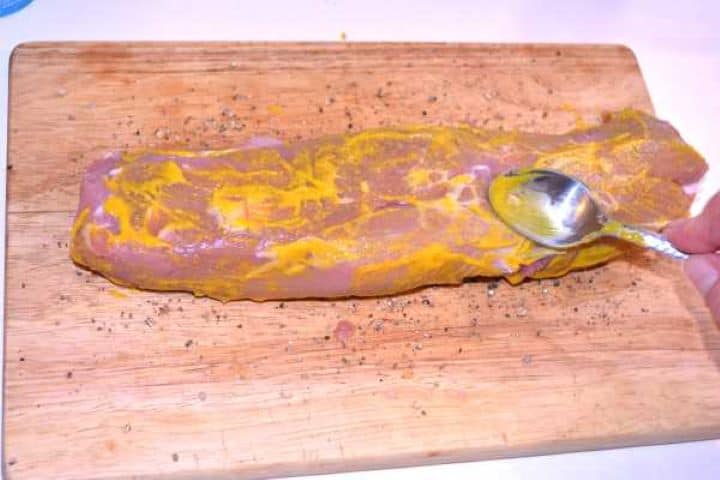
- Pat the pork tenderloin completely dry with paper towels. Using a sharp paring knife, slide under and trim away the white silverskin connective tissue so the meat stays flat and tender while cooking. Rub the tenderloin evenly all over with 2 teaspoons of English mustard and season with ½ teaspoon of freshly ground black pepper. Roll the meat gently on your board so the coating is uniform. Hold off on adding salt at this stage, as the mustard and bacon provide natural sodium.
2. Wrap with Smoked Bacon
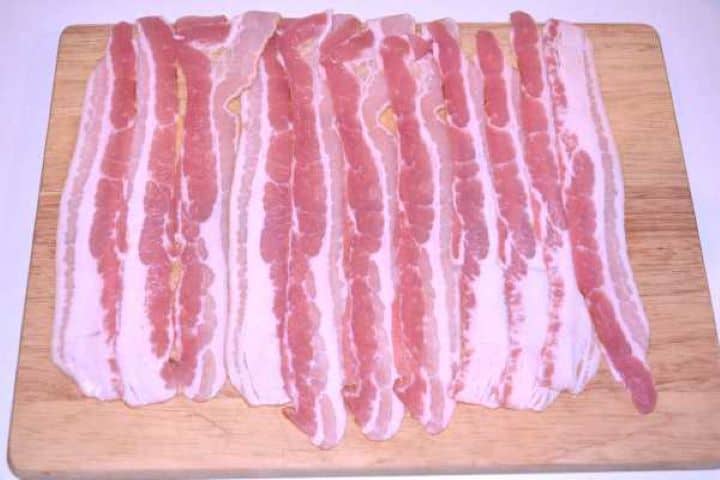
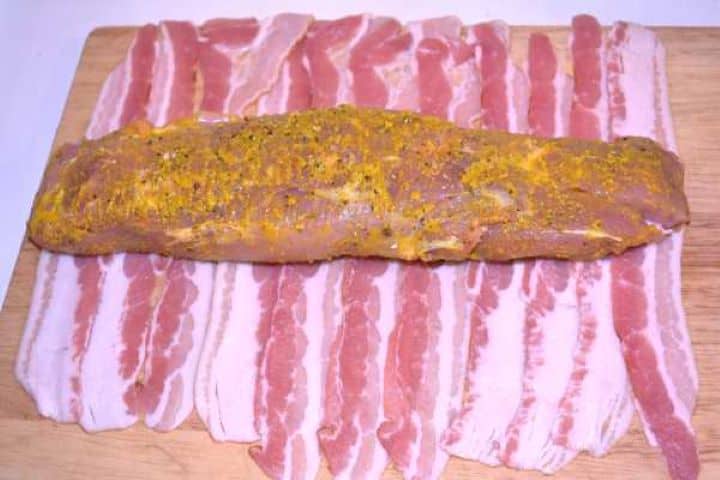
- On a clean cutting board, lay the smoked bacon strips side by side, slightly overlapping the edges so they form a single sheet roughly the same length as the pork tenderloin.
- Place the seasoned tenderloin horizontally across the center of the bacon sheet.
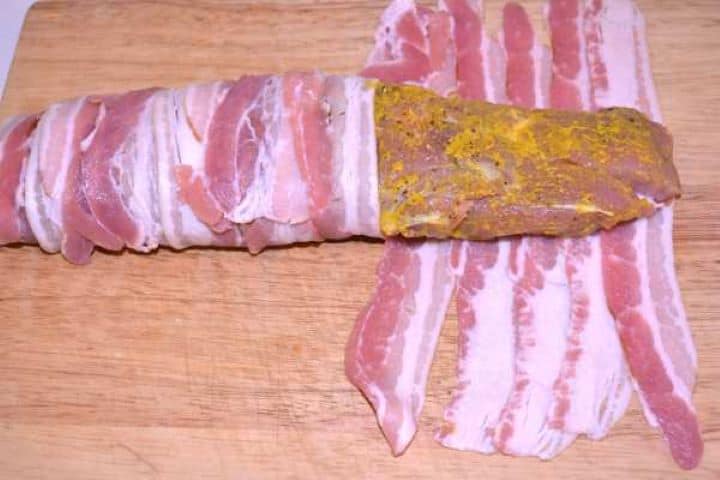
- Fold the bacon slices tightly over the pork one by one, ensuring the entire fillet is snug and completely enclosed. The mustard acts as an adhesive to keep the bacon firmly in place.
3. Pin and Slice into Medallions
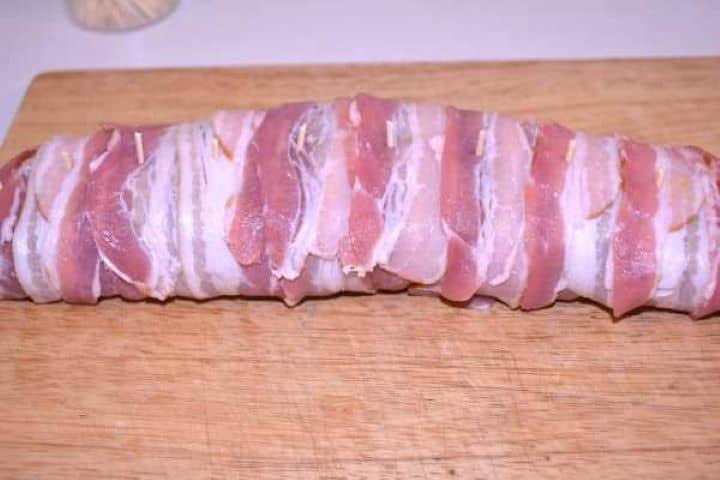
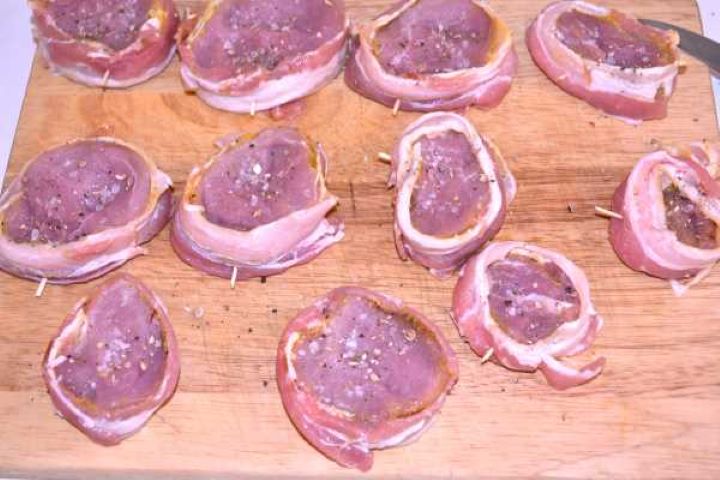
- To prevent the bacon from unrolling during slicing and frying, secure the seam where the bacon ends meet using halved wooden toothpicks. Insert one half-toothpick every 2 to 2.5 cm (1 inch) along the entire length of the roll.
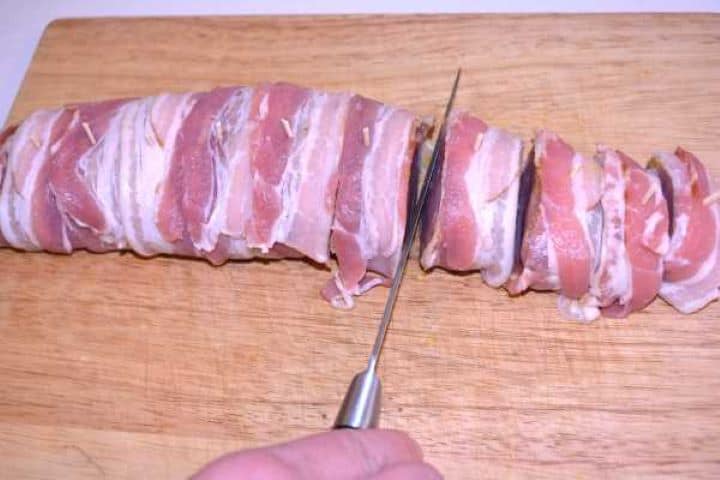
- Using a very sharp chef's knife, slice cleanly through the tenderloin midway between each toothpick.
- Lightly season the cut sides of each medallion with sea salt and a touch more black pepper.
4. Pan-Sear the First Side
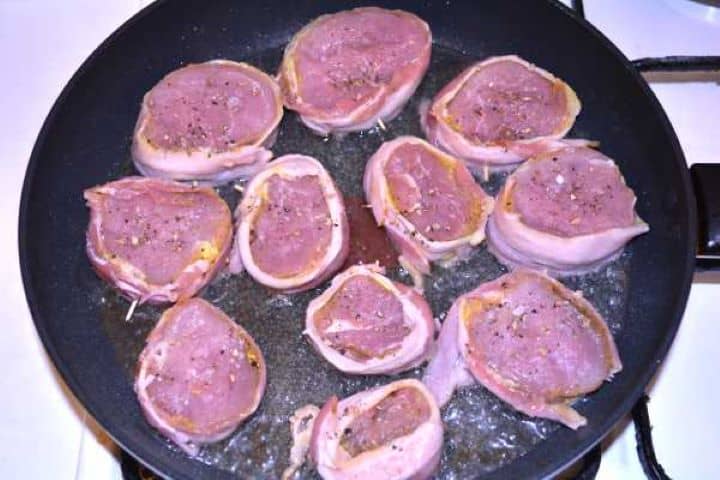
- Set a large skillet or cast-iron frying pan over medium-high heat and add 1.5 tablespoons of sunflower or light olive oil. Once the oil shimmers, lay the medallions into the skillet in a single layer, leaving space between each piece. Fry undisturbed for 3 minutes until the bacon edges render and the bottom develops a deep, golden crust.
5. Flip and Butter-Baste (Arrosé)
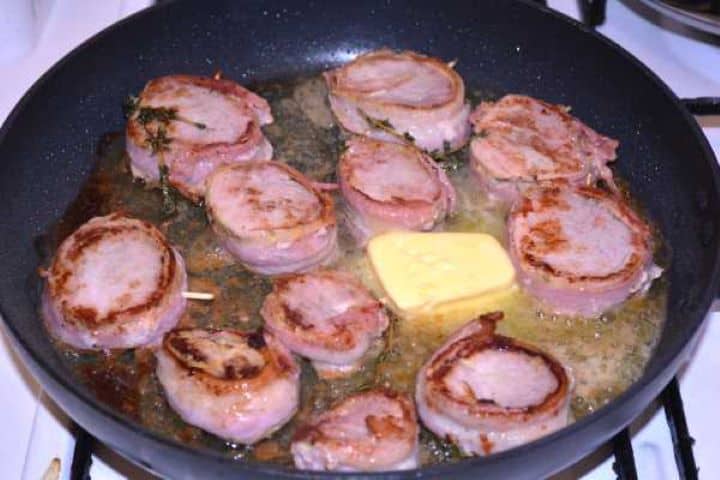
- Turn the medallions onto the second side. Immediately drop in 1 tablespoon of unsalted butter and 5 sprigs of fresh thyme. As the butter melts and foams around the herbs, tilt the skillet slightly toward you and use a large spoon to baste the tops of the medallions continuously for another 3 minutes. Cook until an instant-read meat thermometer inserted into the center reaches 140°F (60°C).
6. Rest and Unpin
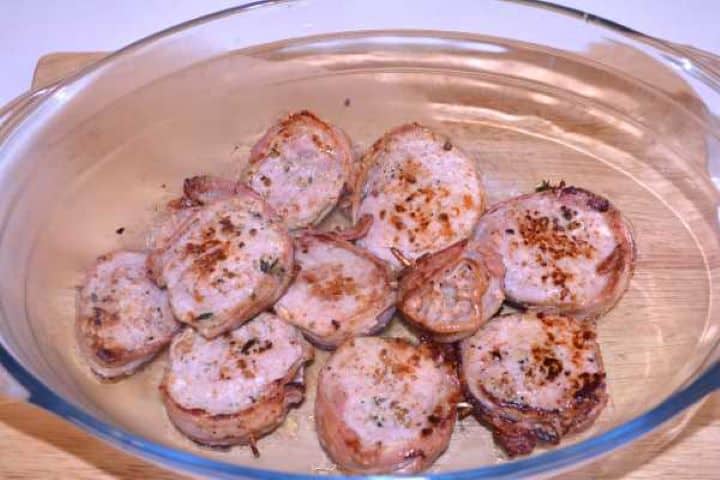
- Transfer the cooked medallions to a warm plate and let them rest loosely tented under foil for 5 to 6 minutes. Carryover heat will gently bring the internal temperature to the safe, succulent target of 145°F (63°C) while locking in all the juices. Gently pull out the toothpicks before plating.
What to Serve with Pork Medallions
The smoky, savory profile of bacon-wrapped pork pairs naturally with both comforting starch bases and bright, acidic sides that cut through the richness:
- Traditional Parsley Potatoes: Boiled baby potatoes tossed with melted butter, sea salt, and generous heaps of fresh flat-leaf parsley.
- Crisp Pickles: Tangy pickled gherkins or sun-fermented pickles provide the sharp acidity needed to balance the smoked bacon.
- Creamy Mash or Creamed Spinach: Ultra-smooth garlic mashed potatoes or braised creamed spinach catch every drop of the thyme-butter pan drippings.
- Fresh Green Salad: A crisp garden salad with mixed greens, radishes, and a light lemon vinaigrette keeps the plate refreshing.
How to Store, Freeze, and Reheat Pork Medallions
Pork tenderloin is lean, so reheating it improperly can quickly strip away moisture. Follow these steps to keep leftovers just as tender as the day they were cooked:
Storing Leftovers
- Cool Completely: Allow the cooked medallions to cool to room temperature (no longer than 1 hour) before packing to avoid condensation build-up inside the container, which softens the crisp bacon.
- Airtight Container: Transfer the medallions into a shallow, airtight glass or BPA-free plastic container. Store in the refrigerator for up to 3 to 4 days.
Freezing Instructions
- Cooked Medallions: Arrange cooled medallions on a parchment-lined tray and freeze for 1 to 2 hours until solid. Transfer them to a zip-top freezer bag or airtight container, pressing out excess air. Freeze for up to 2 months. Thaw overnight in the refrigerator before reheating.
- Raw Prepped Medallions: You can also freeze them raw! After wrapping the tenderloin in bacon, securing with toothpicks, and slicing, freeze the raw portions individually on a sheet pan, then pack them into freezer bags. Thaw completely in the fridge before searing.
The Best Ways to Reheat (Without Drying Out)
- Skillet Method (Recommended):
- Melt a teaspoon of butter or add 2 tablespoons of chicken broth or water to a skillet over medium-low heat. Add the medallions, cover with a lid, and warm gently for 3 to 4 minutes, flipping once, until heated through to 145°F (63°C). The steam keeps the pork succulent, while the butter revives the pan glaze.
- Air Fryer Method (For Crispy Bacon):
- Preheat your air fryer to 175°C (350°F). Place the cold medallions inside and heat for 3 to 5 minutes until hot in the center and the bacon edges re-crisp.
- Oven Method:
- Place the medallions in a small baking dish, add a splash of stock or water, cover tightly with foil, and warm at 160°C (325°F) for 8 to 10 minutes.
- Avoid the Microwave: Microwaving excites the water molecules in lean pork too rapidly, causing the delicate protein fibers to seize and turning tender medallions tough, dry, and rubbery.
Frequently Asked Questions
For juicy, tender pork medallions, aim for an internal target of 145°F (63°C) followed by a 3 to 5-minute rest. Remove the medallions from the pan when your digital instant-read thermometer reads 140°F (60°C) in the thickest center; carryover heat during resting brings the meat to 145°F. At this temperature, the pork will remain succulent with an appetizing faint blush of pink in the very center, which is completely safe according to modern USDA and food safety standards.
Pork tenderloin is an extremely lean muscle with virtually no intramuscular fat marbling. If cooked past 150°F-155°F (65°C-68°C), the protein fibers contract tightly and squeeze out all moisture, leaving the medallions dry, stringy, and chewy. Searing for only 3 minutes per side over medium-high heat and resting for 5 to 6 minutes prevents overcooking. Additionally, leaving the tough silverskin on the meat can make the edges curl and feel rubbery.
Two simple techniques guarantee your bacon stays firmly attached:
1. The Mustard Glue: Smearing the entire tenderloin with English mustard before wrapping creates surface tension that adheres the bacon directly to the raw meat.
2. Pin Before You Slice: Wrapping the entire tenderloin and inserting halved toothpicks every 2 to 2.5 cm (1 inch) before cutting ensures each individual medallion stays wrapped neatly during slicing and frying.
While pan-searing in a hot skillet with butter basting produces the crispiest bacon and richest pan flavor, you can also use other cooking methods:
- In the Oven: Arrange the assembled medallions on a foil-lined baking sheet or a wire rack set over a tray. Bake at 200°C / 400°F for 14 to 16 minutes until the internal temperature reaches 140°F (60°C). Broil for 1 to 2 minutes at the end if you want crispier bacon edges.
- In the Air Fryer: Preheat your air fryer to 190°C (375°F). Place the medallions in a single layer with space between them. Air fry for 9 to 11 minutes, flipping halfway through, until bacon is golden and the internal temperature hits 140°F (60°C).
Yes. You can roll the pork tenderloin in bacon, secure it with toothpicks, and slice the medallions up to 24 hours in advance. Place the raw sliced medallions in a single layer on a parchment-lined tray or container, cover tightly with cling film, and refrigerate. Remove them from the fridge 15 to 20 minutes before cooking so they lose their chill and sear evenly.
More Juicy Pork Recipes You'll Love
If you enjoyed these tender pork medallions, try more of our favorite family pork dinners:
- Cheesy Pork Chops: Tender, juicy pork chops baked with a bubbly, golden cheese crust for an easy weeknight meal.
- Easy Oven-Baked Pork Steak: A simple, fail-safe slow-roast method that guarantees tender, flavorful pork without drying out.
- Pork Steak in an Air Fryer: Perfectly seasoned with crisp, caramelized edges and ready in under 20 minutes.
- Honey Glazed Pork Ribs: Sticky, sweet, and smoky ribs grilled over charcoal until fall-apart tender.
Join Our Kitchen Community!
We share delicious, easy-to-follow recipes every week! Follow along on Facebook and Instagram to see what's cooking next, save this recipe to your dinner boards on Pinterest, and subscribe to our YouTube channel to watch every dish come together step by step. We'd love to see you there!
related
If you loved this bacon-wrapped pork medallions, explore more of our delicious pork recipes:

Juicy Bacon-Wrapped Pork Medallions
Equipment
- 1 Cast-iron frying pan or large skillet (at least 28 cm / 11 inches)
- 2 Chopping boards
- 1 Sharp Chef's Knife or slicing knife
- 5-6 Wooden toothpicks broken in half
- 1 Instant-read digital meat thermometer
Ingredients
- 500 g pork tenderloin trimmed of silverskin
- 200 g smoked bacon strips, thin cut
- 2 teaspoon English mustard or Dijon mustard
- 1 teaspoon sea salt fine
- 1 teaspoon ground pepper freshly ground
- 1.5 tablespoon sunflower oil or olive oil
- 5 sprigs thyme fresh
- 1 tablespoon butter unsalted
Instructions
- Trim and Season the Pork: Pat the pork tenderloin dry using paper towels. Slide a sharp paring knife under the white silverskin connective tissue and trim it off cleanly. Rub the entire tenderloin evenly with 2 teaspoons of English mustard and season with ½ teaspoon of freshly ground black pepper.
- Wrap in Smoked Bacon: Lay the smoked bacon rashers side by side on a clean chopping board, slightly overlapping them to match the length of the tenderloin. Place the seasoned tenderloin horizontally across the center of the bacon sheet. Fold the bacon strips snugly over the tenderloin one by one so the fillet is fully wrapped.
- Secure and Slice: Insert halved wooden toothpicks along the seam where the bacon ends overlap at 2 to 2.5 cm (1 inch) intervals. Using a sharp chef's knife, cut between each toothpick into individual medallions. Lightly season both exposed cut sides of each medallion with sea salt and the remaining black pepper.
- Sear in the Skillet: Heat 1.5 tablespoons of sunflower oil in a large skillet over medium-high heat until shimmering hot. Arrange the medallions in a single layer with space between each piece. Fry undisturbed for 3 minutes until the bacon edges render and the bottom develops a golden-brown crust.
- Flip and Butter-Baste (Arrosé): Flip the medallions onto the second side. Immediately add 1 tablespoon of unsalted butter and 5 sprigs of fresh thyme to the skillet. Tilt the pan slightly and spoon the foaming herb butter over the medallions continuously for another 3 minutes. Pull the medallions from the pan when an instant-read thermometer reads 140°F (60°C) in the center.
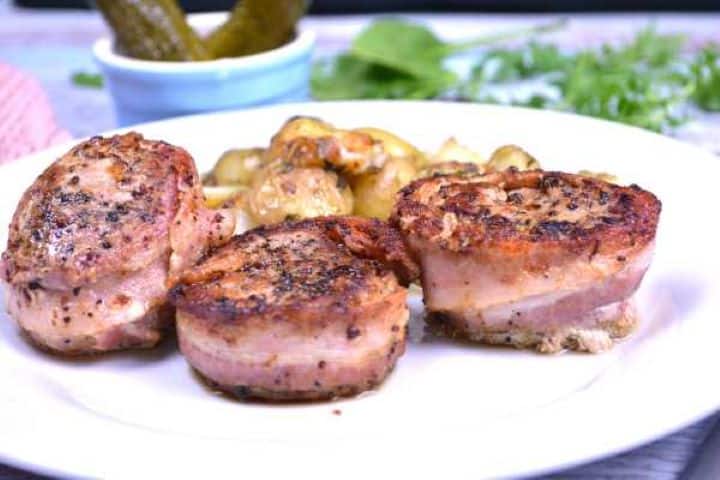
- Rest and Serve: Transfer the medallions to a warm plate, tent loosely with foil, and let rest for 5 to 6 minutes (carryover heat will bring the internal temperature to 145°F / 63°C). Remove all toothpicks before serving with warm parsley potatoes and pickles.
Video
Notes
- Target Temperature: Cook to an internal temperature of 140°F (60°C) in the pan, then rest up to 145°F (63°C). A light blush of pink in the center guarantees juiciness and is completely safe.
- Bacon Choice: Always select thin-cut streaky bacon. Thick-cut bacon takes twice as long to render and crisp up, which risks overcooking the delicate pork tenderloin center.
- Safety Reminder: Remember to pull out the wooden half-toothpicks right after resting and before plating.
Nutrition
This post contains affiliate links. Read the full disclosure here.