

This homemade pork spam recipe is the answer for anyone who loves the savory flavor of classic luncheon meat but craves a clean ingredient list. For years, canned Spam has been a staple, but the mystery ingredients and high sodium can be a turn-off. We're here to show you how to make luncheon meat from scratch using just quality pork, a few simple seasonings, and a process that guarantees the perfect, sliceable texture. Prepare yourself-this homemade version delivers superior flavor and quality that will make you ditch the store-bought can forever!

While luncheon meat is a beloved pantry staple year-round, its popularity soars during certain seasons and holidays-particularly summer grilling season and picnic holidays like Memorial Day and Labor Day, where its sliceable, cookable form makes it perfect for outdoor meals and Hawaiian-inspired dishes.
This version, in fact, was inspired by the techniques we perfected in our popular recipe for bacon-wrapped turkey meatloaf. Furthermore, this incredible homemade pork spam recipe doesn't stand alone; it truly shines when paired with a perfect side. We highly recommend slicing up this fresh loaf and serving it alongside our amazing recipe for Hungarian potato salad, transforming a simple meal into an unforgettable culinary experience right here from Timea's Kitchen.
Jump to:
- 🔪The Simple Ingredients for Homemade Pork Luncheon Meat
- ▶️[Video] Watch the Step-by-Step Homemade Spam Recipe
- 🔪How to Make Spam from Scratch: The Key to Perfect Texture
- 🌶️ Variations: Customizing Your Homemade Pork Spam
- 🍽️ Creative Ways to Serve Your Pork Luncheon Meat
- 🧊 Storage: Keeping Your Homemade Pork Spam Fresh
- 💡 Top Tips for the Perfect Homemade Spam Loaf
- ❓ Frequently Asked Questions (FAQ)
- 👋 Join the Timea's Kitchen Community!
- Related
- Pairing
- Homemade Pork Spam Recipe: Make Luncheon Meat from Scratch
🔪The Simple Ingredients for Homemade Pork Luncheon Meat
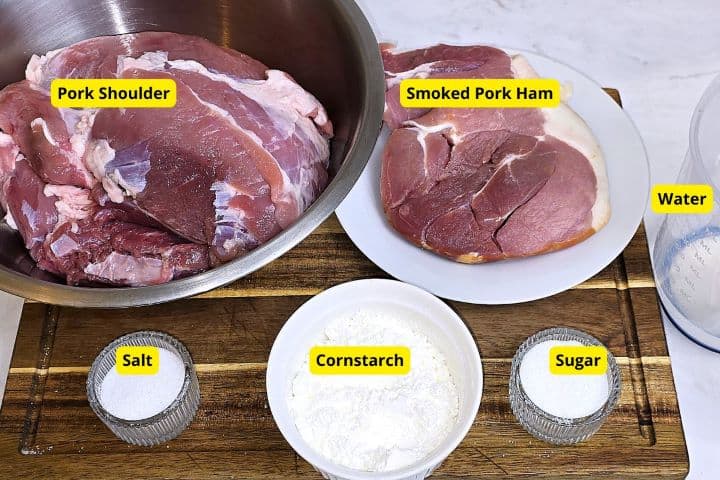
The secret to why this homemade pork spam recipe tastes so incredibly fresh lies entirely in its short, high-quality ingredient list. Unlike the store-bought cans that rely on stabilizers and fillers, this recipe requires just a few basic components, proving you don't need a factory to make luncheon meat from scratch. This combination provides the perfect balance of richness, savory flavor, and the critical binding agents necessary to achieve that signature, firm texture.
- 1.5 kg Pork Shoulder: Provides the necessary high fat-to-meat ratio for juicy flavor and ideal texture.
- 380 g Smoked Pork Ham: Adds the crucial smoky, cured flavor that mimics the classic taste of Spam.
- 2 tablespoon Pork Lard (Optional): Use only if your pork is lean; essential for moisture retention and proper binding.
- 2 teaspoon Sugar: Balances the saltiness and aids in the texture and browning of the final product.
- 2 teaspoon Salt: Necessary for seasoning, curing the meat, and binding the proteins for a firm consistency.
- 2 tablespoon Cornstarch: The primary binding agent that absorbs moisture and helps the loaf hold its perfect, sliceable shape.
- 150 ml Water: Used to dissolve the cornstarch and add essential moisture for the binding process.
▶️[Video] Watch the Step-by-Step Homemade Spam Recipe
We understand that cooking with new techniques, especially when trying to make luncheon meat from scratch, is often easier to follow visually. That's why we created a detailed video walking you through every stage of this homemade pork spam recipe. From preparing the pork shoulder to perfectly cooking the final loaf, our video demonstrates the key mixing and binding secrets needed to achieve that ideal, firm Spam texture. Grab your ingredients, hit play below, and let us guide you through the process for the best results!
🔪How to Make Spam from Scratch: The Key to Perfect Texture
The difference between a crumbly, unappealing meatloaf and a perfectly firm, sliceable loaf of luncheon meat comes down to technique-specifically, how you handle the proteins and moisture. This is the heart of our homemade pork spam recipe. In this section, we guide you through the precise steps required to emulsify the fat and meat, ensuring you successfully make luncheon meat from scratch that holds its shape beautifully and delivers that classic, satisfying texture every time. Follow these instructions exactly, and you'll achieve Spam perfection.
Prepare the Meat
Remove the chilled pork shoulder from the freezer and cut it into small, uniform cubes, approximately 1-inch in size. This smaller, cold size is essential for feeding the meat grinder and ensuring a consistent final grind.

Take the smoked pork ham and cut it into pieces of the same size-roughly 1-inch cubes. Keeping the ham pieces consistent with the pork shoulder ensures even mixing and processing in the subsequent steps.
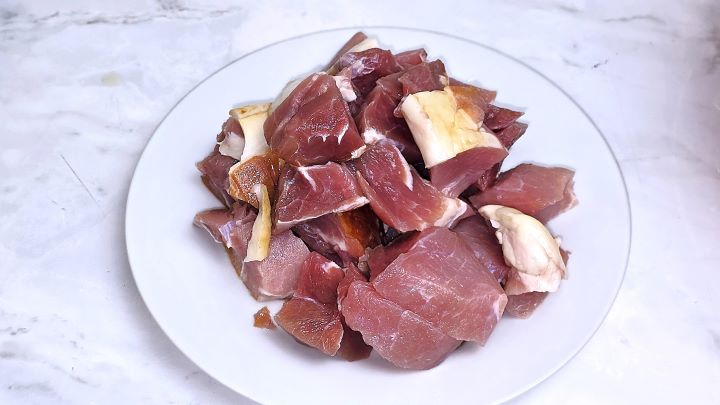
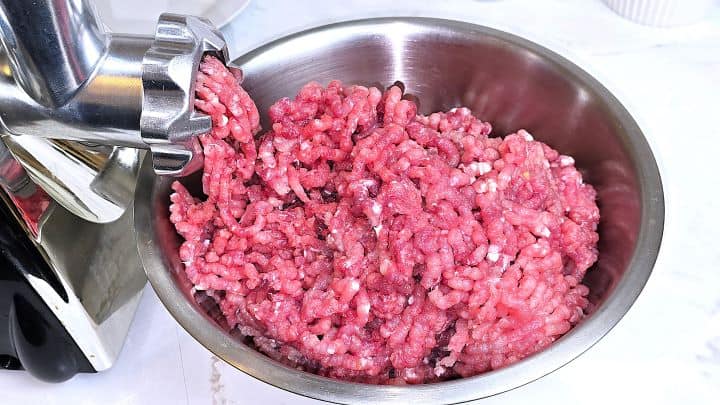
Place both the diced pork shoulder and the smoked ham into a large, very cold bowl. Use an electric or manual meat grinder and pass all the meat through the grinder once, catching the mixture back into the large bowl. This initial grind combines the ingredients and begins the necessary fat-and-protein blending.
Seasoning the Meat
If you determined that your ground meat mixture is particularly lean, now is the time to add in the pork lard. Using your hands, mix the lard into the ground meat until it is just combined. This ensures even fat distribution, which is vital for binding and keeping the loaf moist.
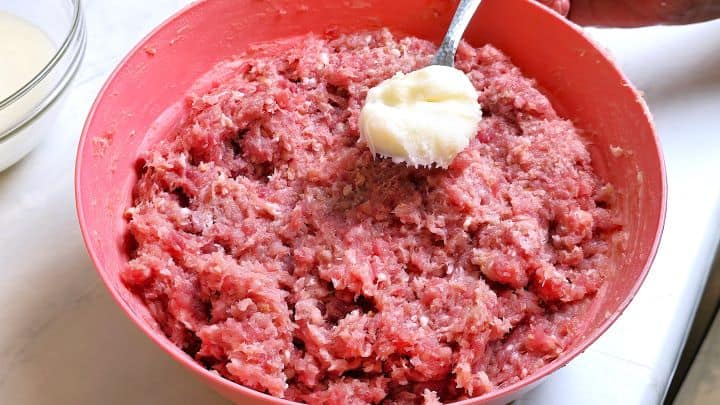
In a separate small bowl, combine the sugar, salt, and cornstarch. Pour in the 150 ml of water. Whisk or stir vigorously until all the dry ingredients are completely dissolved and the mixture is fully combined, forming a smooth slurry. This mixture will be your primary binder and seasoning.
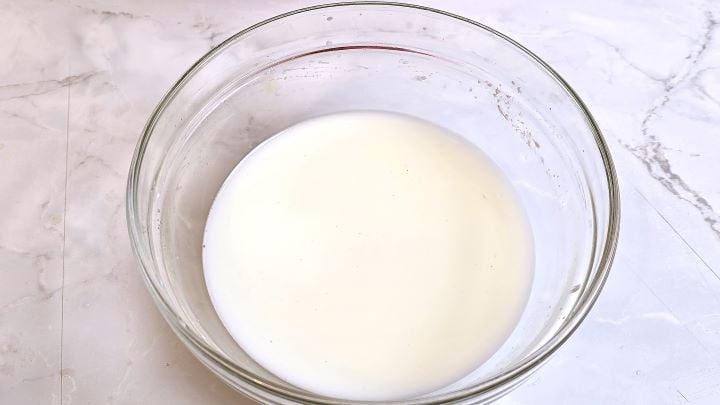
Pour the entire prepared slurry mixture over the seasoned mince meat in the large bowl. This liquid will activate the cornstarch and dissolve the salt into the protein, initiating the binding process.

This is the most critical step for texture! Use your hands to mix and knead the meat vigorously for about 3 to 5 minutes. The mixture must transform from loose mince into a sticky, cohesive paste that pulls away cleanly from the sides of the bowl. This action emulsifies the fat and protein, which is the key to a firm, sliceable final texture.
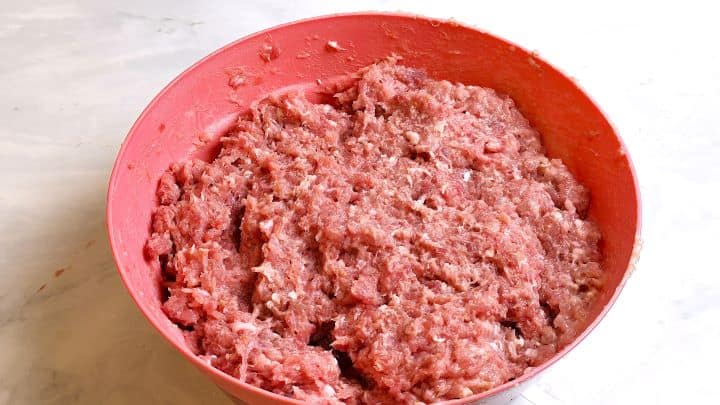
Shaping the Loaf
Gather the fully mixed, sticky mince meat and press it firmly into one large loaf tin or two smaller loaf tins. It is essential to press the meat down tightly to eliminate any air pockets-this compaction is crucial for achieving that dense, uniform texture associated with quality luncheon meat
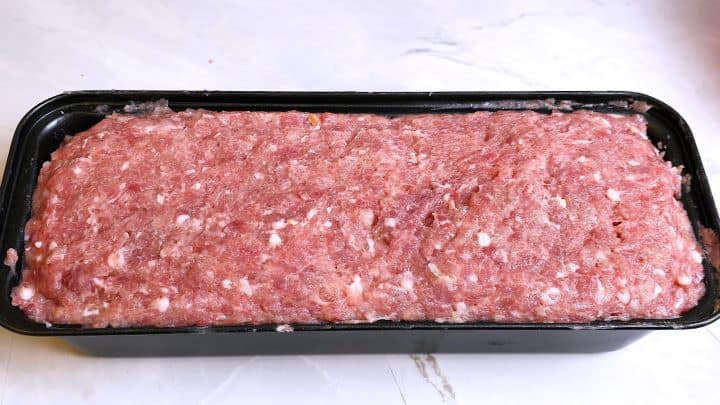
Tightly cover the top of the loaf tin(s) with aluminum foil. Next, place the covered tin into a larger, deep oven tray. Fill the oven tray with hot water, ensuring the water level comes at least halfway up the sides of the loaf tin. This water bath (or bain-marie) guarantees gentle, moist, and even heat transfer, which prevents the meat from drying out or overcooking on the edges.
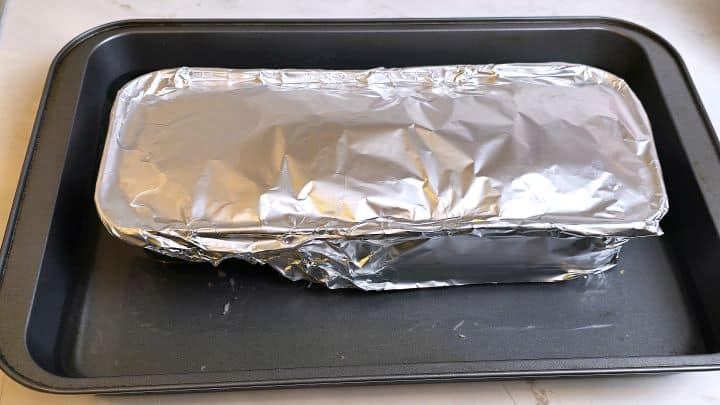
Cooking the Luncheon Meat
Carefully place the entire tray, complete with the water bath, into a preheated oven set to a low temperature of 120°C (250°F). Cook the loaf for 3 hours. This long, slow cooking time is necessary to gently cook the pork through and activate the cornstarch binder, ensuring the final loaf is perfectly firm and sliceable.
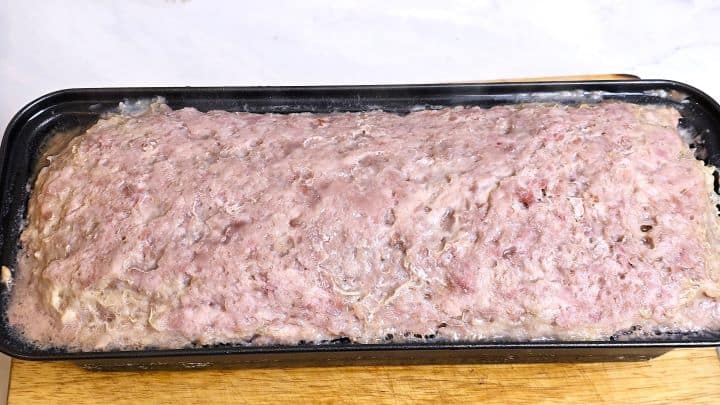
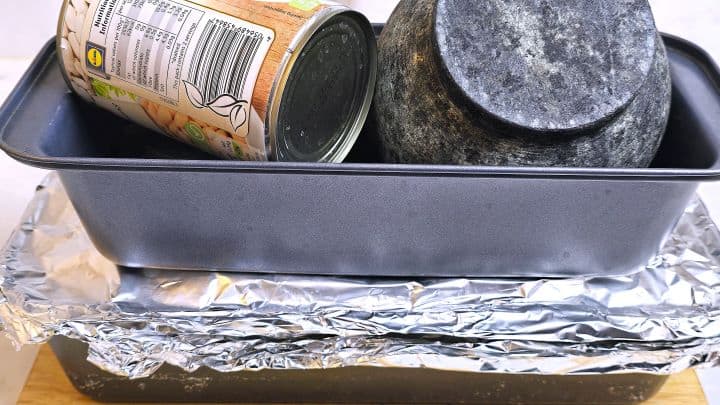
Immediately upon removing the loaf tin from the oven, pour out any excess rendered fat that has risen to the top. To ensure the loaf sets to a dense and firm texture, place heavy items (such as cans of food or a brick wrapped in foil) directly on top of the loaf while it is still in the tin. Leave the loaf to cool completely to room temperature under this weight. This pressing action will squeeze out any remaining air and ensure maximum compaction before chilling.
Once the loaf has reached room temperature, you can easily unmold it from the tin. Now, the real fun begins: you can slice and serve your fresh luncheon meat immediately. As you've seen, mastering how to make Spam from scratch doesn't require complex machinery or arcane knowledge; it only takes quality ingredients and patience during the mixing and cooling stages.
The result is a savory, perfectly sliceable loaf that is incomparably easy to make and incredibly delicious. We hope this recipe inspires you to take control of your favorite processed foods and enjoy the superior flavor of home-cooked quality!
🌶️ Variations: Customizing Your Homemade Pork Spam
Once you've mastered the classic homemade pork spam recipe, you can easily customize it to suit your preferred flavors and dietary needs. Since you've taken the time to make luncheon meat from scratch, don't hesitate to experiment with these simple but delicious changes:
- Spicy Spam: Add 1-2 teaspoons of smoked paprika or red pepper flakes to the mince when adding the slurry. For a deeper heat, try mixing in 1 tablespoon of Sriracha or Gochujang (Korean chili paste) before kneading.
- Sweet & Savory Glaze: Before placing the loaf tin in the water bath, brush the top of the mince with a mixture of brown sugar and soy sauce. This will create a sticky, caramelized crust similar to popular Asian-style Spam preparations.
- Herb Infusion: For an earthy flavor, mix 1 teaspoon of dried oregano or thyme into the seasonings before creating the slurry. This works especially well if you plan to use the Spam in sandwiches or alongside pasta dishes.
🍽️ Creative Ways to Serve Your Pork Luncheon Meat
The versatility of your finished homemade pork spam recipe is truly its best feature! Unlike the canned version, your fresh, flavorful loaf is ready to star in countless dishes. Once it's fully chilled and unmolded, here are the best ways to enjoy this delicious luncheon meat you took the time to make luncheon meat from scratch:
- The Perfect Fry: Slice the Spam into ¼-inch thick pieces and pan-fry them in a skillet until they are golden brown and slightly crispy on the edges. This is the most common and delicious way to prepare it.
- Breakfast Staple: Serve pan-fried slices alongside eggs, toast, and homemade hash browns. The savory, salty flavor is a perfect counterpoint to a fluffy scramble.
- Simple Sandwich: Slice the loaf thinly and pile it onto a simple white homemade potato bread sandwich with a little mayonnaise and cheddar cheese-a classic, satisfying lunch.

🧊 Storage: Keeping Your Homemade Pork Spam Fresh
One of the great advantages of making this homemade pork spam recipe is knowing exactly how fresh it is. Because you have taken the time to make luncheon meat from scratch without chemical preservatives, proper chilling and storage are crucial to maintain both flavor and safety.
- Chilling is Mandatory: After the loaf has cooled completely under the press at room temperature, it must be transferred to the refrigerator. Do not slice the entire loaf at once; only slice what you plan to consume immediately.
- Refrigerator Storage (Short-Term): Store the loaf wrapped tightly in plastic wrap, foil, or in an airtight container in the refrigerator. Properly chilled, your homemade Spam will remain fresh and delicious for 5 to 7 days.
- Freezer Storage (Long-Term): For longer storage, slice the cooled loaf into thick portions (or in recipe-sized portions). Wrap each portion tightly in plastic wrap, then place them all into a heavy-duty freezer bag or airtight container. Homemade Spam freezes well and can be kept for up to 3 months. Thaw overnight in the refrigerator before using.
- Safety Note: Always ensure you heat the Spam slices to an internal temperature of at least 74∘C (165∘F) when cooking for maximum food safety, especially after freezing.

💡 Top Tips for the Perfect Homemade Spam Loaf
Achieving that firm, sliceable texture and rich, savory flavor is the goal of this homemade pork spam recipe. Here are the most important insider secrets and techniques to guarantee your loaf sets up beautifully and tastes amazing every time:
- Keep Everything COLD (Critical!): The single most important tip is to keep the meat, the grinder parts, and the mixing bowl as cold as possible. Chilling the diced pork for 30 minutes before grinding prevents the fat from melting (smearing) and separating from the lean meat, which is essential for proper emulsification.
- Don't Skimp on the Kneading: That 3 to 5 minutes of vigorous mixing after adding the slurry is non-negotiable. You must develop the protein bonds (myosin) to make the mince sticky and cohesive. If the mixture is not sticky, your loaf will be crumbly.
- Press Down Tightly: When transferring the mince into the loaf tin, press it down very firmly to eliminate all air pockets. The denser the pack, the more uniform and sliceable your final luncheon meat will be.
- Always Use the Water Bath: The 120∘C (250∘F) oven combined with the water bath is the secret to a gentle cook. It prevents the edges of the loaf from drying out or overcooking before the center is done, ensuring a moist texture throughout.
- Patience is Key for Setting: The pressing and cooling period is just as vital as the baking time. Do not attempt to slice the loaf until it has been completely cooled to room temperature and then chilled in the refrigerator for several hours (ideally overnight). This ensures the fat and binders fully solidify, giving you that firm, clean slice.
❓ Frequently Asked Questions (FAQ)
Keeping the meat chilled (even partially frozen) before and during grinding is the most critical step for texture. Cold temperatures prevent the fat from warming up and separating from the lean meat. If the fat smears, the mixture won't emulsify properly, and your final loaf will be crumbly instead of firm and sliceable.
While a meat grinder is ideal for achieving the perfect consistency, you can use a high-powered food processor as an alternative. When using a food processor, work in small batches and pulse the meat until it reaches a coarse, ground texture. Be careful not to over-process it into a paste, and remember to keep the food processor bowl and blade chilled beforehand.
The pork shoulder is highly recommended because of its fat content (roughly 30%), which is vital for both flavor and binding. If you must substitute, use another high-fat cut like pork belly or a blend of lean pork and additional pure back fat to ensure the mixture has enough fat to emulsify correctly.
No, this is not a shelf-stable product. Store-bought Spam uses high-heat pressure canning and industrial curing agents to make it shelf-stable. Your homemade pork spam recipe must be treated like any fresh, cooked meat product. It is only safe when stored in the refrigerator for 5-7 days or frozen for up to 3 months.
👋 Join the Timea's Kitchen Community!
We are so thrilled that you've successfully learned how to elevate a classic by mastering this homemade pork spam recipe! We hope you enjoy the superior flavor and quality of the luncheon meat you made from scratch. Don't let the cooking journey end here-we love connecting with our readers! If you loved this recipe, please tag us in your photos, leave a comment below, and share your favorite ways to use your homemade loaf!
To keep up with all our latest recipes and cooking adventures, be sure to follow us on our social channels: Facebook, Instagram, and Pinterest, and subscribe to our YouTube and TikTok channels! Happy cooking from all of us at Timea's Kitchen!
Related
Looking for other mince meat recipes like this? Try these:



Pairing
These are my favorite dishes to serve with homemade pork spam:





Homemade Pork Spam Recipe: Make Luncheon Meat from Scratch
Equipment
- 1 meat grinder
- 1 mixing bowl
- 1 baking tray
- 1 loaf tin
Ingredients
- 1.5 kg pork shoulder cold, from fridge
- 380 g smoked pork ham or bacon
- 2 tablespoon pork lard if necessary
- 2 teaspoon sugar granulated
- 2 teaspoon sea salt kosher
- 2 tablespoon cornstarch powder
- 150 ml water cold
Instructions
- Cut the cold pork shoulder into small, uniform cubes, approximately 1-inch in size.
- Take the smoked pork ham and cut it into pieces of the same size-roughly 1-inch cubes.
- Use an electric or manual meat grinder and pass all the meat through the grinder once,
- If your ground meat mixture is particularly lean, add in the pork lard. Using your hands, mix the lard into the ground meat until it is just combined.
- In a small bowl, combine the sugar, salt, and cornstarch. Pour in the 150 ml of water. Whisk vigorously until all the dry ingredients are completely dissolved, forming a smooth slurry.
- Pour the slurry mixture over the seasoned mince meat in the large bowl.
- Use your hands to mix and knead the meat vigorously for about 3 to 5 minutes.
- Gather the fully mixed, sticky mince meat and press it firmly into one large loaf tin.
- Cover the top of the loaf tin with aluminum foil. Place the covered tin into a larger, deep oven tray. Fill the oven tray with water, ensuring the water level comes at least halfway up the sides of the loaf tin.
- Place the entire tray, complete with the water bath, into a preheated oven set to a low temperature of 120°C (250°F). Cook the loaf for 3 hours.
- Pour out any excess rendered fat that has risen to the top.
- Place heavy items (such as cans of food or a brick wrapped in foil) directly on top of the loaf while it is still in the tin. Leave the loaf to cool completely to room temperature under this weight.
- Once the loaf has reached room temperature, you can unmold it from the tin.
Video
Notes
Nutrition
This post contains affiliate links. Read the full disclosure here.
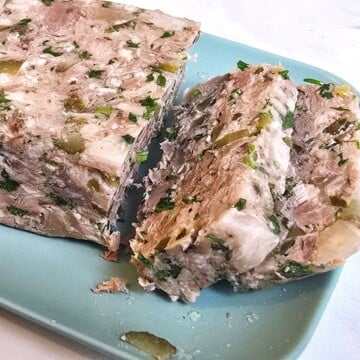



You must try this luncheon meat, it's really good.