If you have ever visited a traditional Greek taverna tucked away in a cobblestone village alley, you will know the intoxicating aroma of Beef Stifado (Στιφάδο). The warm, sweet scent of cinnamon and nutmeg mingling with rich red wine, garlic, and slow-cooked onions is unlike any regular beef stew.
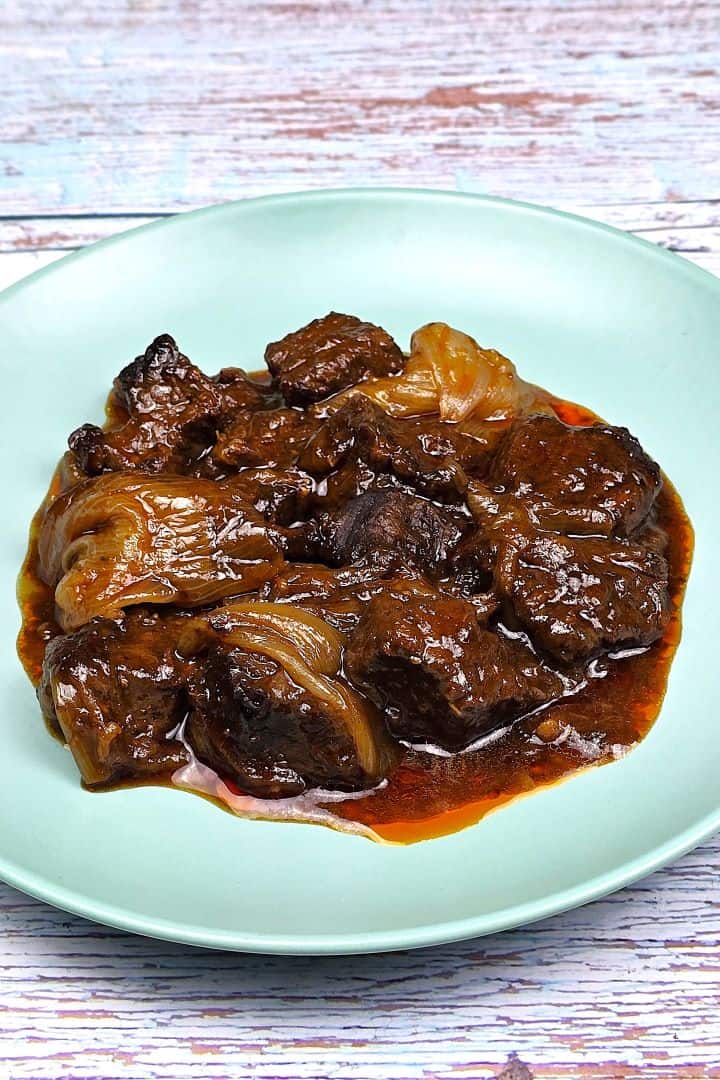
What makes an authentic Stifado truly unique is the ratio of onions to meat and the fragrant spice profile. Instead of diced onions that melt into the background, Stifado features generous quantities of whole shallots that turn tender, sweet, and glossy as they simmer alongside succulent chunks of beef in a Dutch oven.
Jump to:
- Why you'll love this Greek Stifado:
- The Secret to the Best Stifado: The Shallots
- Key Ingredients
- Watch the Video Recipe
- Step-by-Step Cooking Method
- What to Serve With Greek Beef Stifado
- Recipe Variations & Substitutions
- How to Store, Freeze & Reheat Greek Beef Stifado
- Frequently Asked Questions (FAQ)
- More Hearty Stew Recipes You'll Love
- Pairing
- Stifado - Greek Beef Stew With Shallots
Why you'll love this Greek Stifado:
- One-pot comfort: Everything is browned and slow-simmered in a single cast iron Dutch oven.
- Melt-in-the-mouth texture: Two hours of gentle braising transforms lean beef into fork-tender morsels.
- Signature Mediterranean flavours: Warm cinnamon, fragrant bay leaves, nutmeg, and a splash of tangy balsamic vinegar balance the natural sweetness of the shallots.
- Even better the next day: Like many braised stews, the flavours deepen and marry overnight in the fridge.
The Secret to the Best Stifado: The Shallots
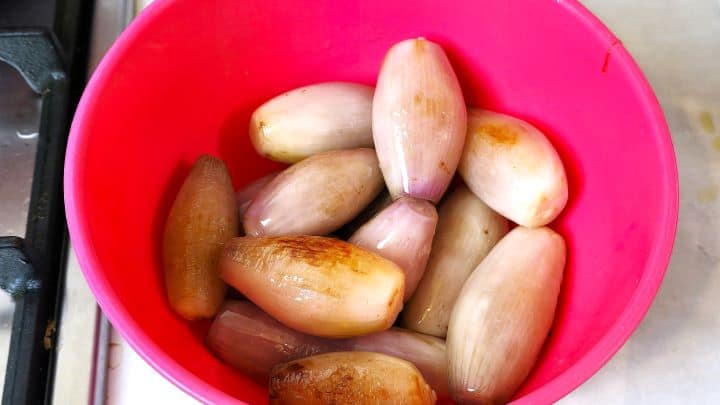
The hallmark of a proper Stifado is whole, intact shallots. The key technique here is browning the shallots first and setting them aside:
- Gentle caramelisation: We fry the shallots in fragrant olive oil over medium-low heat until they soften and take on a pale golden colour, being careful not to scorch them.
- Preserving shape and texture: Taking them out while we brown the beef and build the sauce ensures they won't turn into mush. We return them to the Dutch oven for the long braise so they absorb the spiced sauce while holding their beautiful round shape.
Key Ingredients
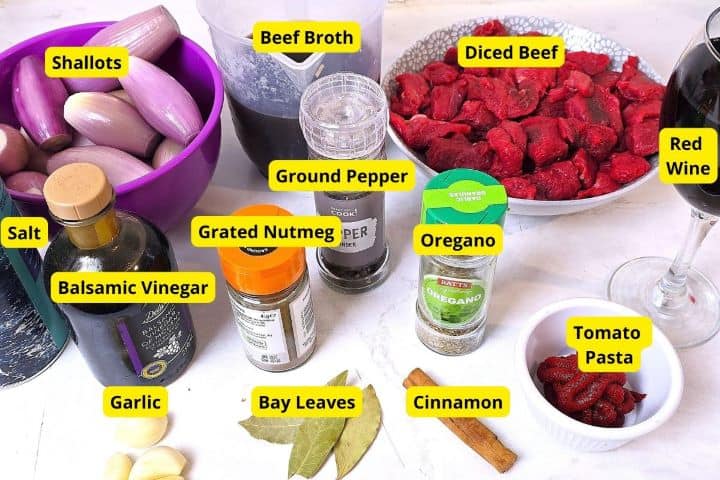
- Beef (700 g): Lean diced beef, braising steak, or chuck steak cut into bite-sized pieces. Chuck works wonderfully because its collagen breaks down during the 2-hour simmer into gelatin, giving the sauce a luxurious body.
- Shallots (800 g): Traditional baby shallots or small pickling onions. Peeled whole so they become plump, sweet flavour bombs.
- Olive Oil (100 ml): A generous pour of good-quality olive oil forms the foundation of authentic Greek cooking.
- Tomato Purée (1 tbsp): Concentrated tomato paste provides depth, colour, and umami without overpowering the delicate spice balance.
- Garlic (4 cloves): Crushed to infuse the braising liquid.
- The Spices & Herbs:
- 1 Cinnamon Stick: The non-negotiable hallmark of traditional Stifado.
- 3 Bay Leaves: Earthy, aromatic herbal undertones.
- 1 tablespoon Dried Oregano: Quintessentially Greek.
- ½ teaspoon Ground Nutmeg: Adds warmth and complexity.
- Balsamic Vinegar (1 tbsp): A touch of acidity balances the natural sweetness of caramelised shallots and rich wine.
- Dry Red Wine (200 ml): Choose a full-bodied dry red you enjoy drinking (such as Agiorgitiko, Cabernet Sauvignon, or Merlot).
- Beef Stock or Water: Just enough to cover the meat (around 400-500 ml).
Watch the Video Recipe
If you are a visual learner, watch the full video tutorial below to see the exact colour you are looking for on the shallots, how to brown the beef, and how that rich, glossy sauce comes together in the Dutch oven:
Step-by-Step Cooking Method
1. Brown the Shallots
- Set your Dutch oven over medium heat and pour in 100 ml of olive oil. Once hot, tip in 800 g of peeled shallots.
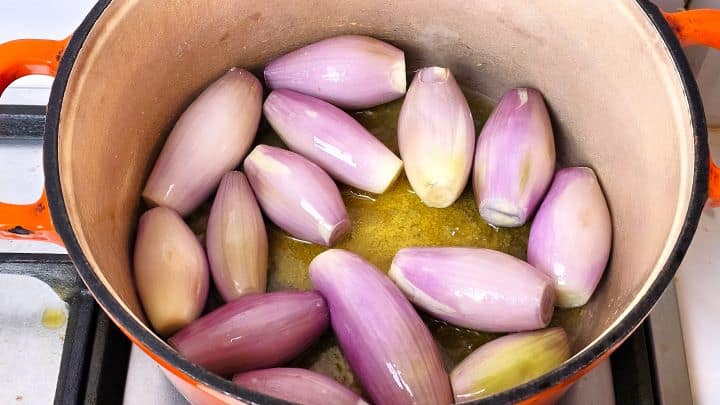
- Sauté gently, stirring frequently, until they have softened slightly and taken on a light, golden-brown colour.
- Do not let them burn. Use a slotted spoon to transfer the shallots to a bowl and set them aside for later.
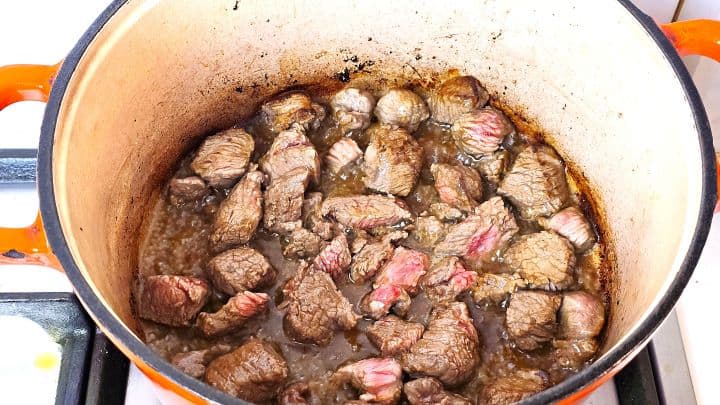
2. Sear the Beef
- In the same Dutch oven, using the remaining hot olive oil, add the 700 g of diced lean beef.
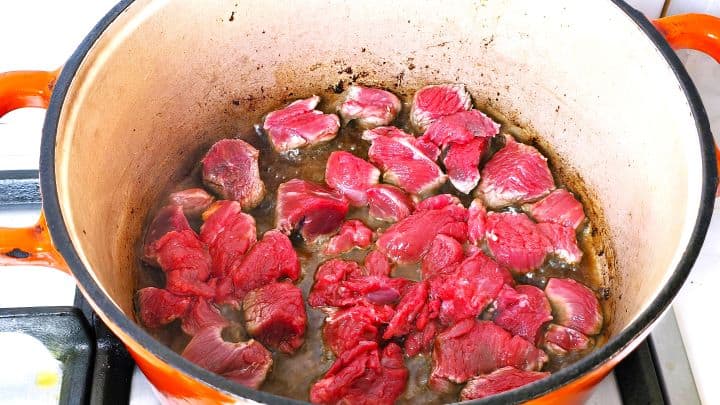
- Fry over medium-high heat, turning occasionally, until the meat changes colour and browns lightly on all sides.
3. Add Aromatics and Seasonings
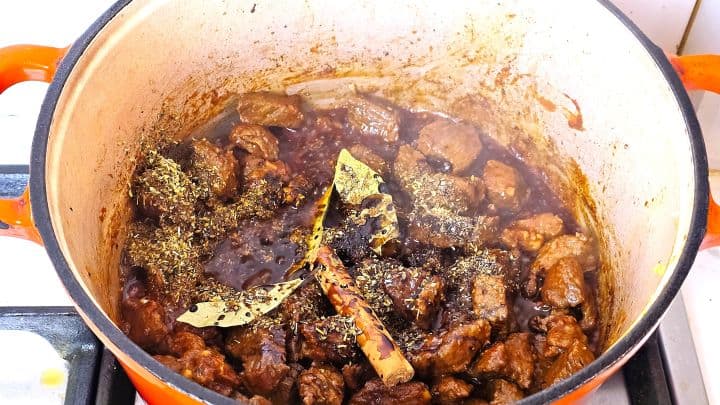
- Stir in 1 tablespoon of tomato purée, letting it cook for 1 minute in the hot oil to caramelise slightly. Add the 4 crushed garlic cloves, 3 bay leaves, and the whole cinnamon stick.
- Season with 1 tablespoon dried oregano, ½ teaspoon ground nutmeg, 1.5 teaspoon sea salt, and 1 teaspoon freshly ground black pepper. Stir well for 30-40 seconds until the spices release their fragrance.
4. Deglaze and Cover
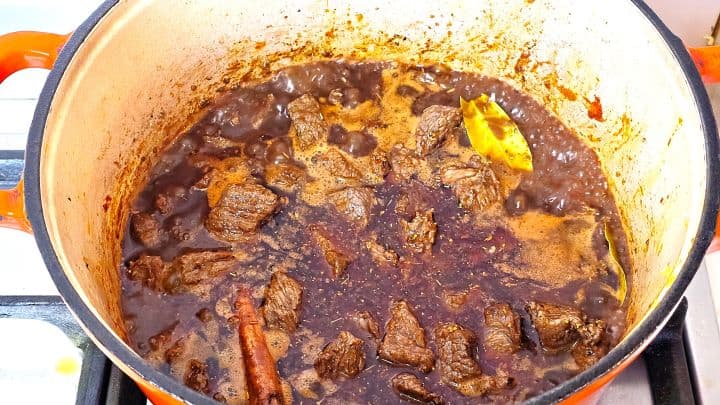
- Pour in 1 tablespoon balsamic vinegar and 200 ml dry red wine, scraping up all the golden bits stuck to the bottom of the Dutch oven with a wooden spoon.
5. Add Back the Shallots & Simmer
- Carefully return the browned shallots and any juices from the bowl back into the pot, gently pressing them down into the liquid.
- Pour in enough beef stock (or water) so the beef is just covered.
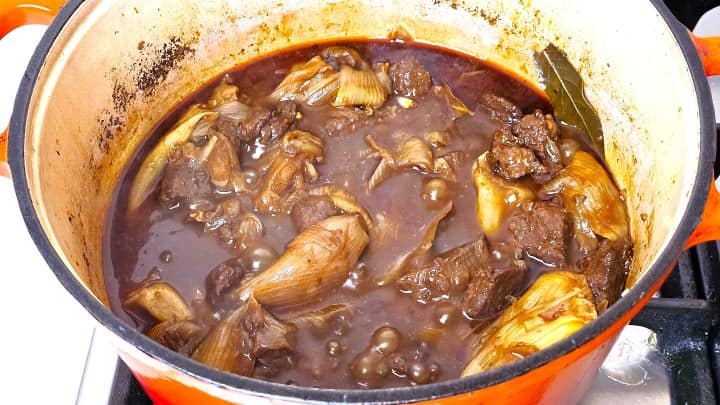
- Bring to a boil, then immediately turn the heat down to low, cover tightly with the Dutch oven lid, and let it simmer gently for 2 hours.
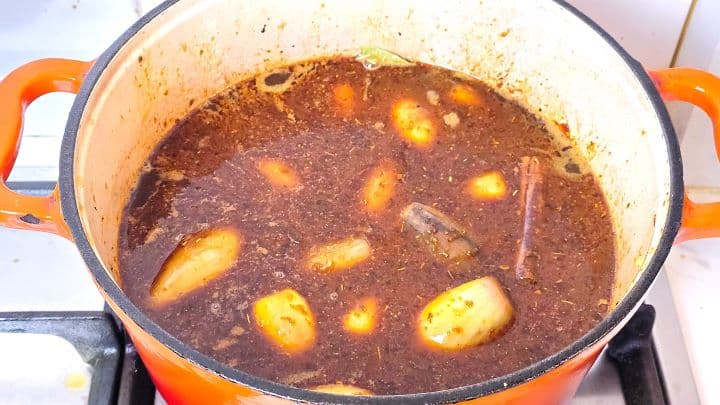
- By the end of the braise, the beef will be melt-in-the-mouth tender, the shallots will be glossy and sweet, and the sauce will have reduced to a thick, glossy consistency.
What to Serve With Greek Beef Stifado
A rich, spiced stew like Stifado demands side dishes that can either catch every drop of that luxurious cinnamon-scented sauce or provide a crisp, refreshing contrast to the hearty meat.
Here are the best traditional and family-favourite ways to serve it:
The Carbs for Sauce Mopping
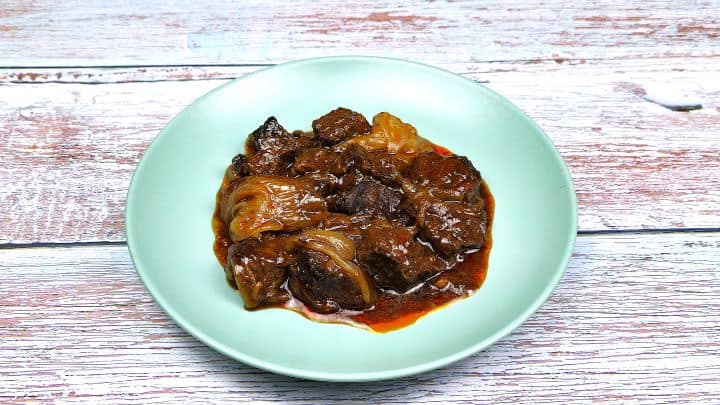
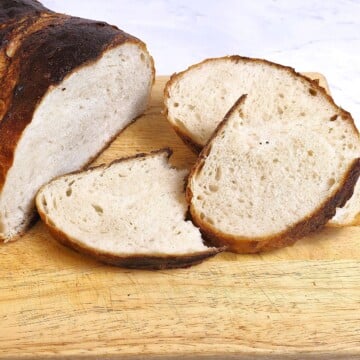
- Crusty Greek Village Bread (Horiatiko Psomi): If you only choose one thing, make it a loaf of warm, crusty artisan bread. The deep, glossy sauce is far too delicious to leave behind in the bowl.
- Greek Orzo (Kritharaki): The quintessential taverna pairing. Toss boiled orzo with a drizzle of extra virgin olive oil or browned butter, and top with a generous dusting of salty, grated Mizithra or Kefalotyri cheese before spooning the rich beef and shallots over the top.
- Creamy Mashed Potatoes: Spoon it over a steaming bowl of Caramelized Onion Mashed Potatoes or buttery Hungarian Parsley Potatoes to soak up all that spiced red wine sauce.
- Fluffy Rice Pilaf: A simple butter or lemon rice pilaf works wonderfully to soak up the juices without competing with the spices.
Fresh, Crisp Sides to Cut the Richness
- Traditional Greek Village Salad (Horiatiki): Chunky ripe tomatoes, crisp cucumbers, kalamata olives, thinly sliced red onion, and a slab of creamy feta drizzled with olive oil and oregano provide the perfect acidic crunch to balance the braise.
- Maroulosalata (Greek Romaine Salad): Finely shredded romaine lettuce tossed with fresh dill, spring onions, and a sharp lemon-olive oil dressing cuts cleanly through the warmth of the cinnamon and nutmeg.
Garnishes & Wine Pairing
- Finishing Touch: Garnish each bowl with freshly chopped flat-leaf parsley for a pop of colour and freshness. A sprinkle of crumbled Greek feta right on top of the hot stew adds a lovely salty tang.
- If you are creating a full taverna-style Greek feast, start the meal with a bowl of homemade Tzatziki or Melitzanosalata (Greek Eggplant Dip).
- In the Glass: Pour a glass of medium-to-full-bodied dry red wine with good acidity and berry notes to complement the warm spices-ideally a Greek Agiorgitiko (Nemea) or Xinomavro, or your favourite Cabernet Sauvignon or Merlot.
Recipe Variations & Substitutions
While tender beef and whole shallots cooked slowly in a Dutch oven make the ultimate classic, here are a few traditional and practical ways to adapt this recipe:
- Oven Braising (Dutch Oven Method): If you prefer not to leave the pot on the hob for two hours, cook it in the oven. After bringing the stew to a boil with the lid on, transfer the Dutch oven to a preheated oven at 160°C (140°C Fan / 325°F / Gas Mark 3) for 2 to 2.5 hours until fork-tender.
- Slow Cooker (Crockpot): Brown the shallots and sear the beef in a pan first, then transfer everything into your slow cooker. Cook on Low for 7-8 hours or on High for 4-5 hours. (Tip: Reduce the beef stock slightly by about 100 ml, as slow cookers release more condensation).
- Alcohol-Free Stifado: Replace the 200 ml of red wine with an equal amount of rich beef stock, plus 1 additional tablespoon of balsamic vinegar or red wine vinegar to provide that essential fruity acidity and depth.
- Traditional Rabbit Stifado (Kouneli Stifado): Rabbit is actually the oldest, most traditional protein used for Greek Stifado. Swap the diced beef for jointed rabbit pieces; the cooking method and spiced braising liquid remain identical.
- Chicken Stifado: If you want a quicker weeknight version, use boneless, skinless chicken thighs cut into large chunks. Simmer for just 45-50 minutes instead of two hours so the chicken stays juicy.
- Adding Potatoes or Carrots: While traditional taverna Stifado focuses strictly on shallots and meat, you can add peeled baby potatoes or thick carrot rounds during the last 45 minutes of simmering for a complete, all-in-one meal.
How to Store, Freeze & Reheat Greek Beef Stifado
Like most slow-cooked braises, Greek Beef Stifado is even better the next day. As it sits, the warm notes of cinnamon and nutmeg mellow into the red wine and sweet caramelized shallots, creating an even richer, more cohesive sauce.
Here is how to store, freeze, and reheat it safely while keeping the shallots intact and the beef juicy:
Cooling & Refrigerating
- Cool Down Completely: Let the stew cool to room temperature before covering it (do not leave it out at room temperature for longer than 2 hours).
- In the Fridge: Transfer to an airtight container and store in the refrigerator for up to 3 to 4 days.
- Make-Ahead Tip: If you are entertaining, cook the Stifado a full day in advance. Store it in the fridge overnight, then gently reheat it on the day of serving-the flavour payoff is well worth it!
Freezing
- Airtight Storage: Stifado freezes brilliantly. Ladle the cooled stew into freezer-safe containers or heavy-duty freezer bags, leaving about 2 cm (1 inch) of headspace for the sauce to expand.
- Freezer Life: Freeze for up to 3 months.
- Thawing: For best results, thaw overnight in the refrigerator before reheating. Avoid thawing at room temperature to preserve the delicate texture of the shallots.
How to Reheat
Because the shallots are tender and cooked whole, always stir gently when reheating so they don't break apart into the sauce.
- On the Hob (Recommended): Tip the stew into a saucepan or Dutch oven over low to medium heat. The gelatin-rich sauce will be quite thick from the fridge, so add a splash (2-3 tbsp) of water or beef stock to loosen it up. Heat gently with the lid on for 10-12 minutes, stirring carefully from the bottom, until piping hot throughout.
- In the Oven: Place the stew in an oven-safe covered dish and warm at 160°C (140°C Fan / 325°F) for 20-25 minutes until heated through.
- In the Microwave (Quick Portions): Place single portions into a microwave-safe bowl, cover loosely with a microwave lid or paper towel, and heat on medium-high in 1-minute bursts, stirring very gently between intervals until steaming hot.
Frequently Asked Questions (FAQ)
The best cuts are chuck steak, braising steak, or beef shin. These cuts have plenty of collagen and marbling, which break down into rich gelatin during the gentle two-hour simmer, leaving the meat succulent and tender. If you are using leaner stewing beef, ensure the heat stays on a very gentle, low simmer so the meat doesn't dry out.
Shallots falling apart is usually caused by two things: cutting them or boiling too vigorously.
- Always leave the shallots completely whole (just trim the very tip of the root without cutting into the flesh).
- Be sure to fry them gently first to set their exterior, set them aside, and only return them for the simmer.
- Keep the Dutch oven on a low, gentle simmer-a rolling boil will agitate and break them up.
The easiest chef trick is the hot water soak: place the unpeeled shallots in a heatproof bowl, pour boiling water over them to cover, and let them sit for 5 to 10 minutes. Drain, trim the dry root tip with a paring knife, and the outer skins will slide straight off with your fingers without slipping or tearing the shallot.
Two things make Stifado uniquely Mediterranean:
1. The Onion Ratio: Traditional Stifado uses an almost 1:1 ratio of whole shallots to meat, creating a naturally sweet, aromatic base.
1. The Warm Spices: Unlike classic French or British stews, Stifado gets its signature tavern aroma from a whole cinnamon stick, ground nutmeg, and tangy vinegar balancing the rich red wine and tomato sauce.
Yes. Simply replace the 200 ml of red wine with an equal amount of good-quality beef stock, and add an extra tablespoon of balsamic vinegar (or red wine vinegar). This replicates the dark colour and bright, fruity acidity that the wine naturally provides.
Yes-in fact, it tastes even better the next day! As the stew rests in the fridge overnight, the warm spices (cinnamon and nutmeg) mellow into the red wine and caramelized onions, creating an even deeper, silkier sauce. Simply reheat gently on the hob over low heat with a splash of water or stock.
More Hearty Stew Recipes You'll Love
If you love the rich, melt-in-your-mouth comfort of this Greek Beef Stifado, you will definitely want to try these other slow-cooked family favourites:
- Traditional Hungarian Beef Pörkölt (Beef Stew): Rich, deep, and deeply comforting. Tender chunks of beef braised slowly with sweet Hungarian paprika, onions, and sweet peppers until the gravy is thick, silky, and perfect for spooning over homemade nokedli (dumplings).
- Classic Dutch Oven Beef Stew: A timeless crowd-pleaser made right in your cast iron pot. Fall-apart tender beef chuck, baby potatoes, and sweet carrots simmered in a deeply savoury, herb-infused red wine and beef broth.
- Pork Goulash with Homemade Drop Dumplings: Succulent pork shoulder simmered low and slow with garlic, caraway, and paprika, finished with tender, bite-sized nokedli that soak up every bit of flavour.
- Hearty White Bean and Pork Stew: A rustic, warming comfort bowl loaded with creamy white beans, tender pork, and aromatic root vegetables in a fragrant, golden tomato broth.
Join Our Kitchen Community! 👩🍳✨
Did you make this Greek Beef Stifado? We'd love to hear how it turned out! Please leave a comment and a 5-star rating on the recipe card above-your feedback means the world to us and helps fellow home cooks discover traditional recipes.
If you love authentic home-cooked meals, come connect with us across our social channels:
- YouTube: Subscribe to our channel so you never miss a new step-by-step video tutorial.
- Instagram: Tag us in your cooking photos-we love seeing your kitchen creations and resharing them to our stories!
- Facebook: Follow our page to join the conversation, share meal ideas, and get the latest recipe updates.
- Pinterest: Save and pin this recipe to your favourite dinner boards so it's always just a tap away when cravings strike.
Thank you so much for cooking with us, and happy cooking! ❤️
- Timea & Laci
Pairing
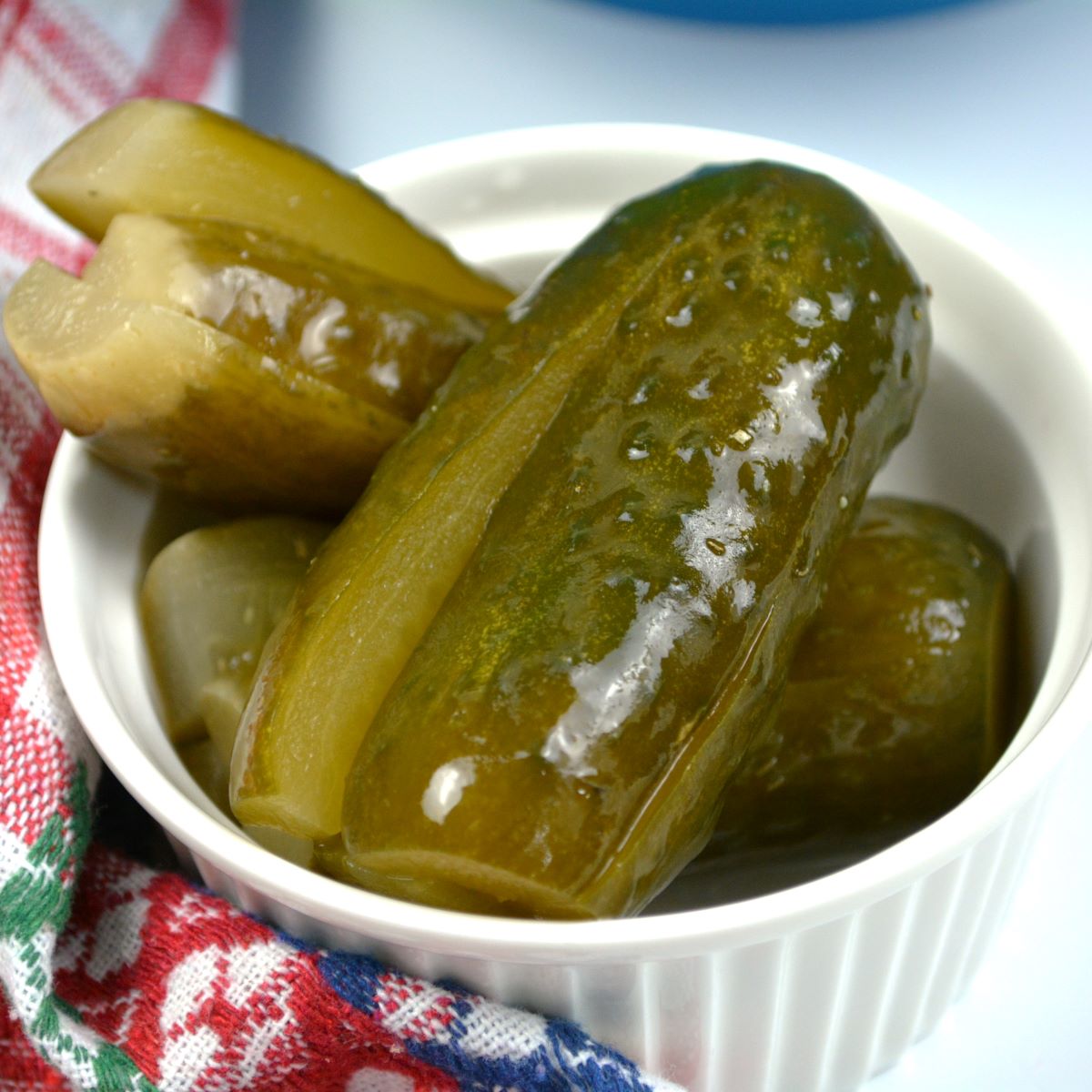
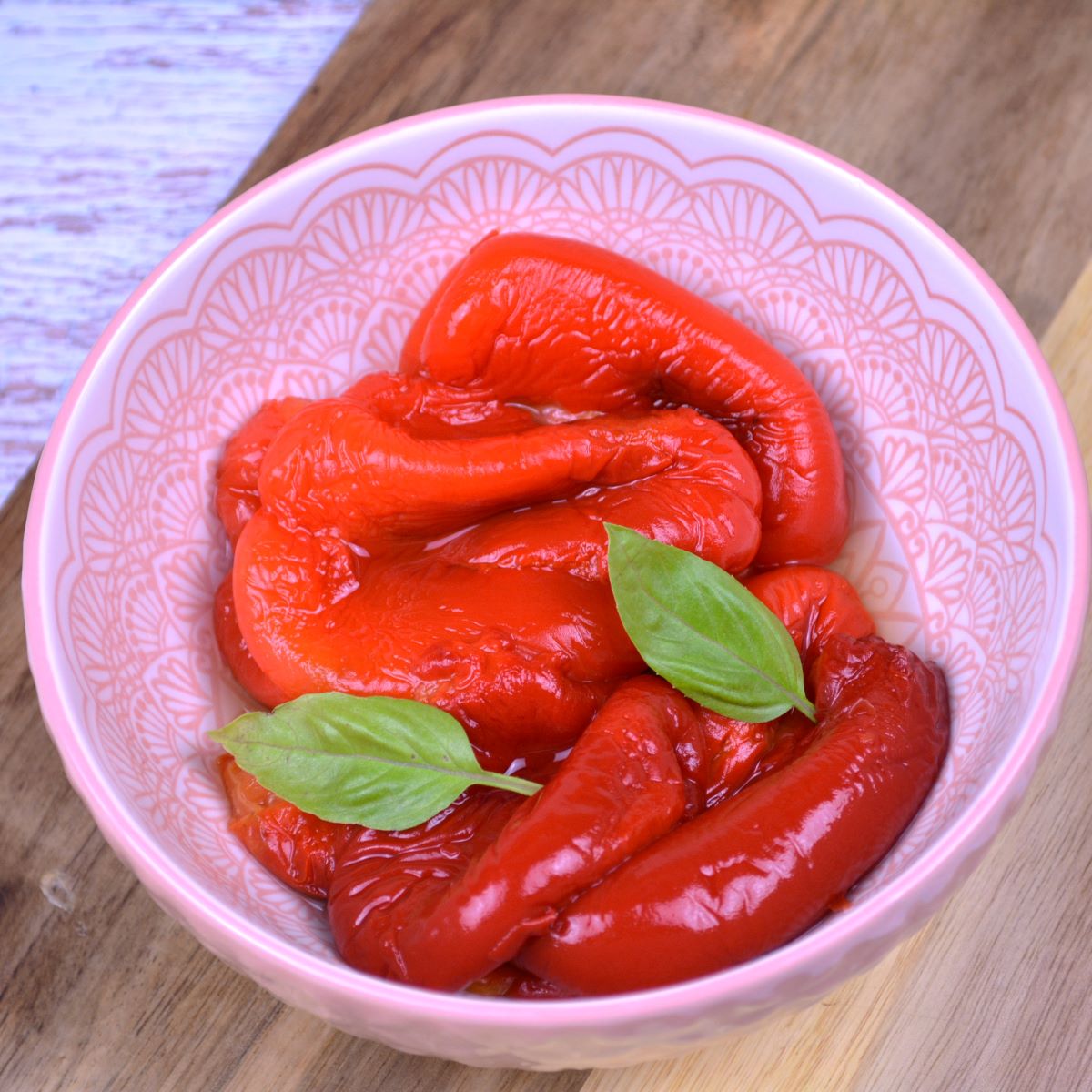
These are my favorite dishes to serve with the Greek stifado:

Stifado - Greek Beef Stew With Shallots
Equipment
- 1 cast iron dutch oven or heavy-bottomed lidded pot
- 1 Slotted Spoon
- 1 wooden spoon
Ingredients
- 100 ml olive oil extra virgin
- 800 g shallots peeled, left whole
- 700 g lean beef braising or chuck steak, cut into bite-sized chunks
- 1 tablespoon tomato purée tomato paste
- 4 cloves garlic crushed
- 3 pcs bay leaves dried
- 1 pc cinnamon stick whole
- 1 tablespoon oregano dried
- ½ teaspoon nutmeg ground
- 1.5 teaspoon sea salt or to taste
- 1 teaspoon ground black pepper freshly ground
- 1 tablespoon balsamic vinegar or red wine vinegar
- 200 ml red wine dry
- 500 ml beef stock or water, enough to cover the meat
Instructions
- Brown the Shallots: Heat 100 ml olive oil in a Dutch oven over medium heat. Add 800 g peeled whole shallots and sauté gently until soft and lightly browned, taking care not to scorch them. Remove with a slotted spoon into a bowl and set aside.
- Sear the Beef: In the same Dutch oven, add 700 g diced lean beef. Sauté over medium-high heat until the meat changes colour and lightly browns on all sides.
- Add Aromatics & Spices: Stir in 1 tablespoon tomato purée and cook for 1 minute. Add 4 crushed garlic cloves, 3 bay leaves, and 1 whole cinnamon stick. Season with 1 tablespoon dried oregano, ½ teaspoon ground nutmeg, 1.5 teaspoon sea salt, and 1 teaspoon ground black pepper. Stir for 30 seconds until fragrant.
- Deglaze: Pour in 1 tablespoon balsamic vinegar and 200 ml dry red wine, using a wooden spoon to deglaze the pot and scrape up any browned bits from the bottom.
- Add Stock & Shallots: Pour in enough beef stock (or water) to completely cover the meat. Return the fried shallots and their resting juices to the pot, gently pressing them into the liquid.
- Simmer: Bring to a boil, then turn the heat down to low, cover with the lid, and simmer gently on the hob for 2 hours until the beef is meltingly tender and the sauce is rich and glossy.
- Serve: Discard the cinnamon stick and bay leaves before serving. Serve warm with crusty bread, buttered orzo, or creamy mashed potatoes.
Video
Notes
- Oven Method: After completing Step 5 and bringing the pot to a simmer, cover with a tight-fitting lid and transfer the Dutch oven to a preheated oven at 160°C (140°C Fan / 325°F / Gas Mark 3). Bake for 2 to 2.5 hours until the beef is meltingly tender.
- Slow Cooker (Crockpot) Method: Brown the shallots, sear the beef, and assemble the sauce in a skillet as described in Steps 1-4. Transfer everything into the slow cooker bowl along with the shallots. Reduce the beef stock by approx. 100 ml (since slow cookers trap moisture). Cook on LOW for 7-8 hours or HIGH for 4-5 hours.
- Keep Shallots Whole: Do not slice or chop the shallots; leaving them intact prevents them from disintegrating into mush during the long braise.
- Quick Peeling Hack: Place unpeeled shallots in a bowl and pour boiling water over them. Let them sit for 5-10 minutes, trim the root, and the skins will slip right off without tears.
- Sauce Consistency: If you prefer a thicker, reduced gravy, remove the lid for the final 10-15 minutes of simmering.
Nutrition
This post contains affiliate links. Read the full disclosure here.