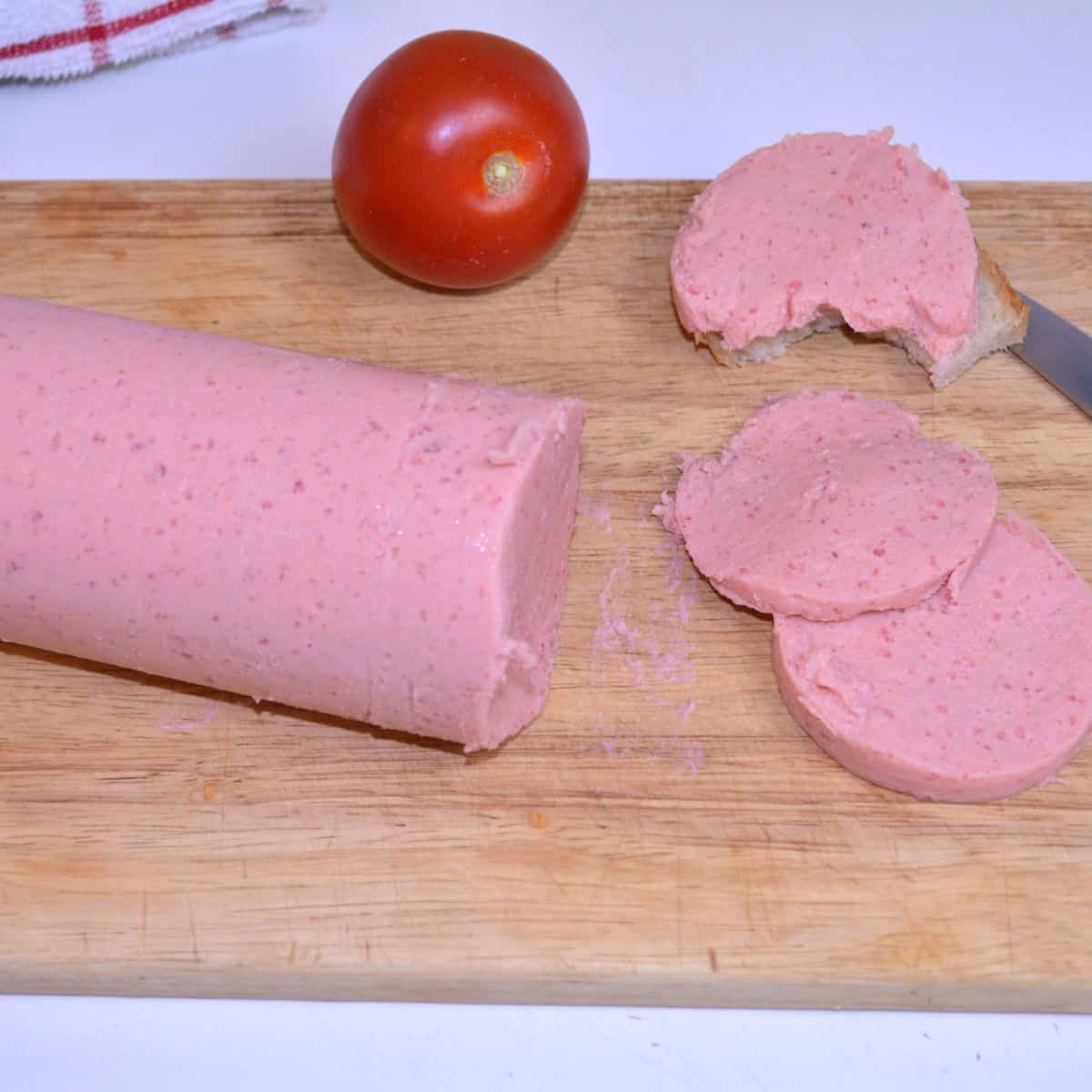
Easy Homemade Chicken Salami Recipe (Preservative-Free)
Servings: 4 portions
Calories: 179kcal
Learn how to make a healthy, sliceable homemade chicken salami recipe using real chicken breast, warming pantry spices, and a natural beetroot tint. No nitrates, artificial colors, or chemical preservatives—ideal for breakfast toast and everyday lunchbox sandwiches!
Print Recipe
Equipment
- 1 Soup Pot medium
- 1 electric food processor or high-speed chopper
- 1 fine-mesh tea strainer
- 1 empty 500 ml (16 oz) plastic bottle or cylindrical silicone mold
- 1 Sharp Chef’s Knife
Ingredients
For Poaching the Chicken
- 500 g chicken breast bone-in
- 1.5 tablespoon vegetable mix for soups
- 1 teaspoon peppercorns whole, black
- 1 piece bay leaf
- 1 teaspoon garlic granules or garlic powder
- 1.5 l Cold water enough to submerge the chicken
For the Salami Paste & Setting
- 1 teaspoon sea salt fine, adjust to taste
- 1 teaspoon paprika sweet Hungarian
- ¼ teaspoon nutmeg ground
- 1 teaspoon onion powder or granules
- ½ teaspoon garlic granules or powder
- 24 g gelatine approx. 2 European sachets or 3 US envelopes / 2½ level tablespoons
- 50 ml chicken broth warm, strained from the poaching pot
- 2 tablespoon beetroot juice squeezed from grated boiled beetroot
Instructions
Step 1: Poach the Chicken & Infuse Broth
- Place the bone-in chicken breast into a soup pot with the dried vegetable soup mix, black peppercorns, bay leaf, and 1 teaspoon of garlic granules.
- Pour in enough cold water to fully cover the meat by at least an inch.
- Bring to a gentle boil over medium heat, then simmer uncovered for 30 minutes until the chicken is tender and thoroughly cooked through.
- Transfer the chicken onto a plate to cool slightly. Strain the poaching broth through a fine-mesh sieve and reserve 50 ml of the warm liquid.
Step 2: Season & Puree
- Remove and discard the bone, skin, and cartilage from the chicken breast, then cut the warm meat into rough 1-inch chunks.
- Transfer the warm chicken pieces into an electric food processor or chopper along with the sea salt, sweet Hungarian paprika, nutmeg, onion powder, and ½ teaspoon garlic granules.
- Pulse until the chicken breaks down into a finely textured, crumbly paste.
- In a small cup, stir the 20–24 g of powdered gelatin into the 50 ml of warm reserved broth until completely dissolved.
- Pour the warm gelatin-broth mixture and the 2 tablespoons of beetroot juice into the processor over the chicken.
- Blend on high speed for 60 to 90 seconds until the mixture transforms into a silky, homogeneous, rosy-pink paste.
Step 3: Mold, Chill & Slice
- Prepare a clean, empty 500 ml plastic bottle by carefully cutting off the tapered neck to create a straight-sided cylinder.
- Spoon the warm chicken paste into the bottle, tapping the base firmly against a counter cushioned with a towel after every few spoonfuls to force out trapped air bubbles.
- Smooth the top surface with the back of a spoon and seal tightly with plastic cling film.
- Chill in the refrigerator for at least 2 hours (overnight for 6–8 hours yields the firmest, cleanest slices).
- To unmold, roll the bottle back and forth between your warm palms for 15–20 seconds to break the vacuum seal, then slide the salami out onto a cutting board. (If needed, make a small snip at the top edge of the plastic and peel it away).
- Slice thinly using a sharp, non-serrated chef’s knife and serve chilled.
Video
Notes
- Gelatin Accuracy: Use 20–24 g of powdered gelatin. In Europe, this is typically 2 sachets (10–12 g each); in the US, use 3 Knox envelopes (7 g each).
- Blend While Warm: Blending the chicken while it and the stock are still warm is vital so the gelatin coats the meat fibers evenly, preventing a grainy finish.
- Storage: Keep wrapped tightly in parchment or plastic film inside an airtight container in the fridge for up to 4–5 days. Best served chilled straight from the refrigerator.
- Alternative Meats: You can substitute boneless turkey breast or lean pork tenderloin for the chicken. If using pork, simmer for 40–45 minutes until fork-tender.
Nutrition
Calories: 179kcal | Carbohydrates: 4g | Protein: 32g | Fat: 3g | Saturated Fat: 1g | Polyunsaturated Fat: 1g | Monounsaturated Fat: 1g | Trans Fat: 0.01g | Cholesterol: 80mg | Sodium: 813mg | Potassium: 538mg | Fiber: 1g | Sugar: 1g | Vitamin A: 368IU | Vitamin C: 4mg | Calcium: 32mg | Iron: 1mg
